
What is the California SR-1 form?
The California SR-1 form is a DMV accident report required after qualifying crashes. It is separate from a police report and separate from an insurance claim. Drivers miss it because it is administrative, but the form belongs on the same checklist as treatment, repairs, and claim notice.
When does the SR-1 deadline apply?
The SR-1 deadline applies within 10 days when a crash causes injury, death, or property damage above the DMV threshold. A police officer at the scene does not automatically satisfy the driver's duty. An insurer opening a claim also does not prove the DMV report was filed.
What is a common California crash example?
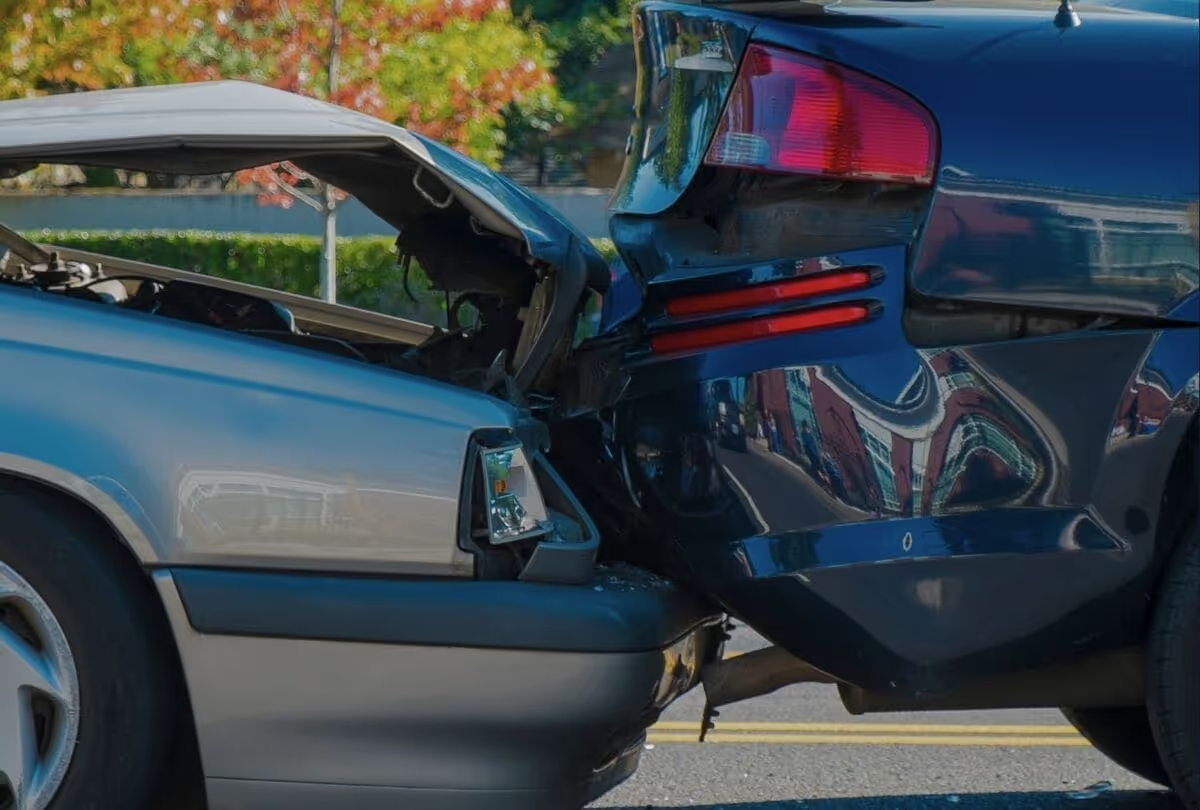
An Orange County driver is rear-ended in a parking lot. The bumper repair costs $1,800, both drivers exchange insurance, and nobody leaves by ambulance. The driver assumes the claim is handled. Weeks later, the driver learns that the property damage amount triggered a separate DMV reporting duty within 10 days.
What evidence and mistakes matter most?
Which 5 records make the SR-1 easier?
The cleanest SR-1 file proves reporting, coverage, damage, and injury status.
- Keep the completed SR-1 form and proof of submission.
- Record carrier names, policy numbers, and coverage information for the crash date.
- Save photos, repair estimates, invoices, towing bills, and rental documents.
- Preserve medical notes showing whether any person reported injury.
- Keep the police report number, exchange form, and claim number.
Which 4 mistakes create DMV problems?
DMV problems usually start when drivers treat one report as every report.
- Assume the police report replaces the SR-1.
- Assume the insurance company files the SR-1 for every driver.
- Ignore minor injury complaints that still trigger reporting.
- Wait past 10 days because the final repair estimate is not finished.
How should this issue be handled before negotiation?
This issue should be handled by converting the rule into a dated evidence checklist. The driver should identify the triggering fact, collect the document that proves it, and ask the insurer to explain any coverage, deadline, or valuation position in writing. A California car accident lawyer can organize this record before the insurer’s position hardens.
Which 4 questions should the file answer?
The file should answer 4 questions before any release, repair authorization, denial, or valuation is accepted.
- Identify the statute, policy term, deadline, or coverage limit that controls the issue.
- Locate the document that proves the trigger fact, such as coverage, timing, identity, permission, or value.
- Confirm which insurer, public entity, driver, owner, platform, or repair shop has the next deadline.
- Decide which missing record would change the claim value if it were obtained now.
What does this mean for settlement value?
Settlement value changes when the issue shifts the claim from ordinary fault to a rule-based proof dispute. The injured person may need to prove coverage, preserve rights, meet a deadline, or correct a valuation before damages are discussed.
Which follow-up steps create proof?
These follow-up steps create a usable record.
- Send a short follow-up email after each claim phone call.
- Compare each insurer reason with documents, photographs, policy language, and deadlines.
- Request written confirmation before signing a release, accepting payment, or authorizing repairs.
- Store every document in a dated claim folder instead of separate email threads.
- Update the timeline when treatment, repairs, inspections, or agency responses change.
- Ask for the specific evidence the adjuster still needs to finish the review.
Which related California accident issues matter too?
California 30/60/15 Insurance Minimums explains why the insurance information on the form can matter after a serious crash. California 40-Day Insurance Claim Rule helps drivers track insurer response deadlines after proof is submitted. California Total Loss Disputes explains why property damage documentation should be organized early. A California car accident lawyer can use the SR-1 file to connect DMV reporting, insurance coverage, and claim evidence.
What should drivers do next?
Drivers should treat the SR-1 as a deadline document, not an optional form. Mark the 10-day date, complete the insurance section carefully, attach the form to the claim file, and keep proof of submission. The form does not decide fault, but missing it can create an avoidable administrative problem.

Michael Avanesian, the founder and driving force behind Avian Law Group, is a passionate and dedicated attorney with a strong background in personal injury law. As a partner at JT Legal Group, Michael led the growth of the personal injury practice from a single employee to a team of over ninety professionals, securing over $2 billion in settlements for clients in just three years.









.jpeg)

.jpeg)