
What is the California seat belt defense?
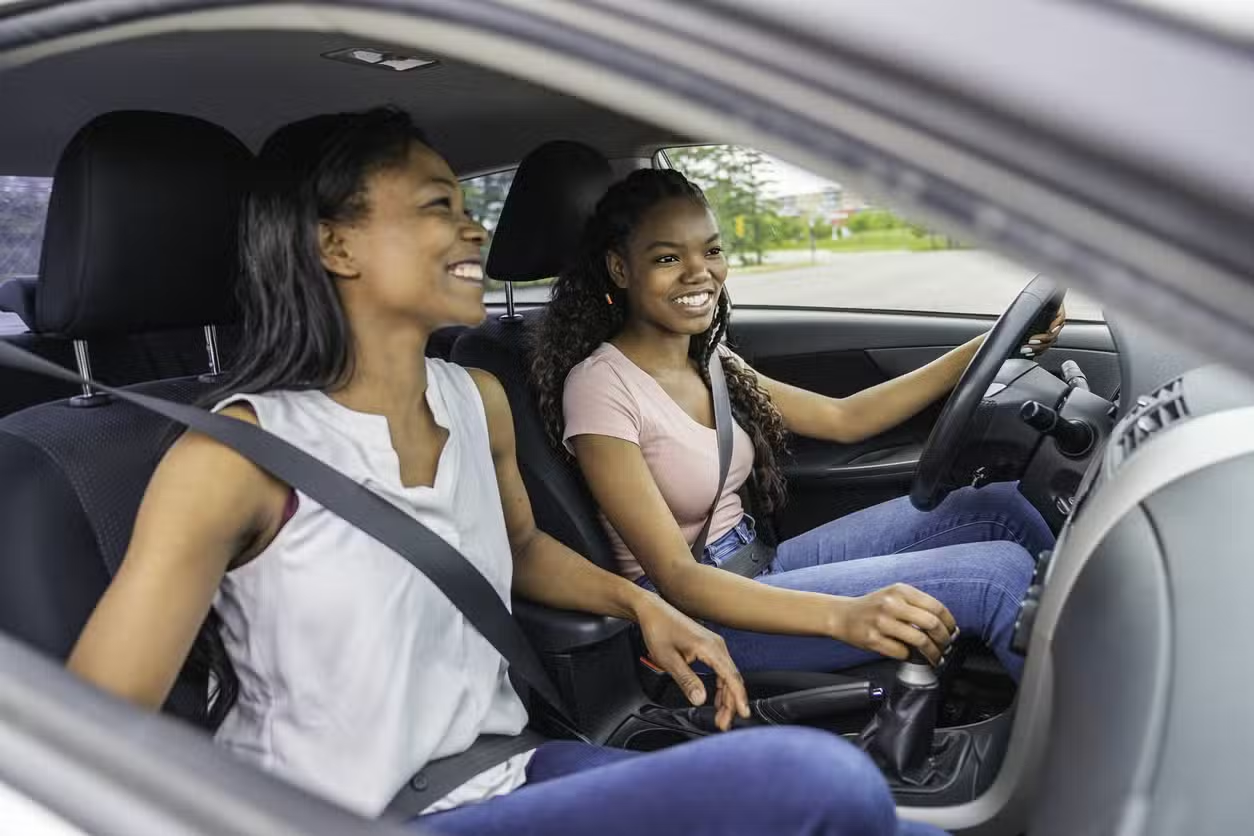
The California seat belt defense argues that an injured person failed to use an available working seat belt and that the failure increased specific injuries. The defense does not erase the crash claim automatically. It targets causation and damages.
Why does the defense affect damages instead of fault alone?
The defense affects damages because California comparative fault can reduce recovery for unreasonable conduct that contributes to harm. A defendant must connect belt nonuse to injuries that would have been avoided or reduced. General statements that seat belts are safer are not enough.
What is a common California crash example?
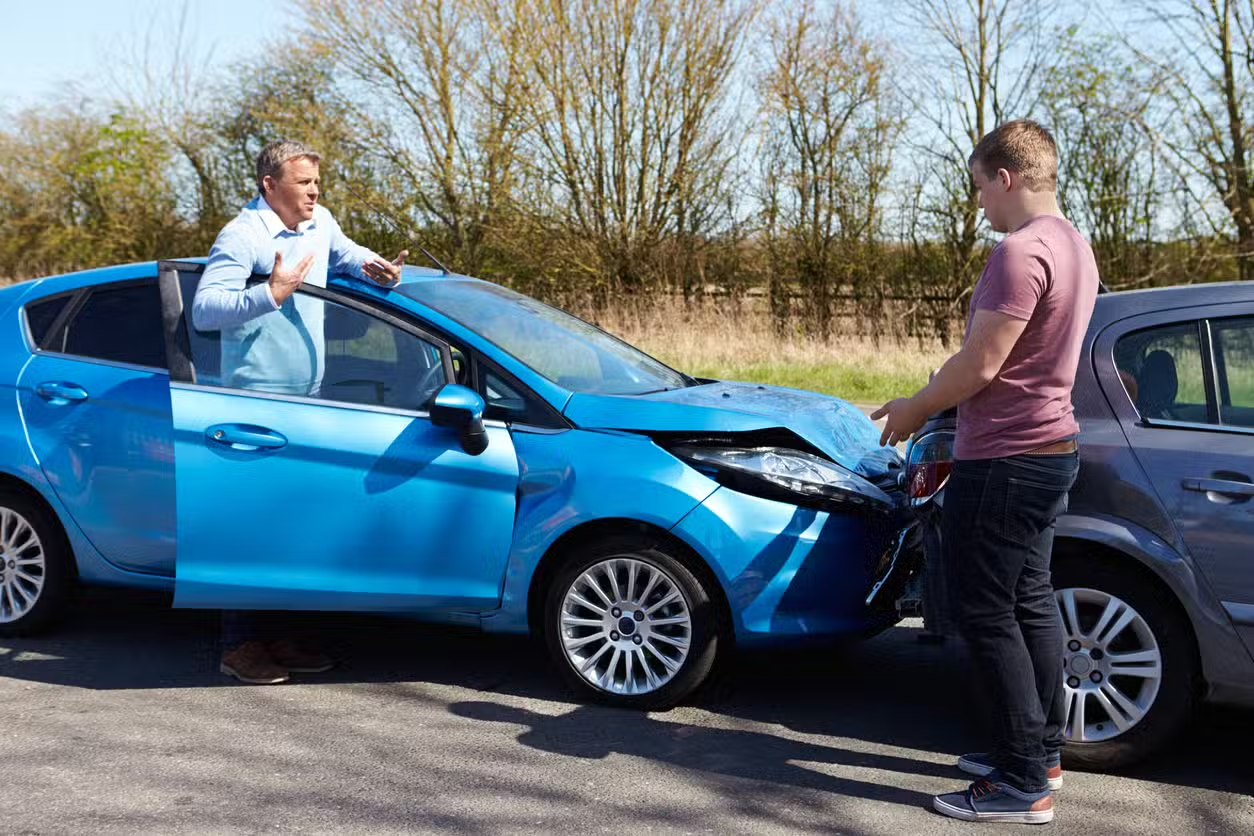
A passenger is injured when another driver runs a red light. The passenger suffers facial injuries and a fractured arm. The defendant admits causing the crash, but argues the passenger was unbelted and that proper restraint would have reduced the injuries. The case then turns on medical, vehicle, and biomechanical evidence.
What evidence and mistakes matter most?
Which 5 records prove or defeat the defense?
The strongest response ties restraint evidence to specific injury mechanisms.
- Review police report notes on seat belt use, seating position, and airbag deployment.
- Obtain medical records describing injury pattern and mechanism of injury.
- Inspect belt condition, latch function, pretensioners, airbags, and interior impact points.
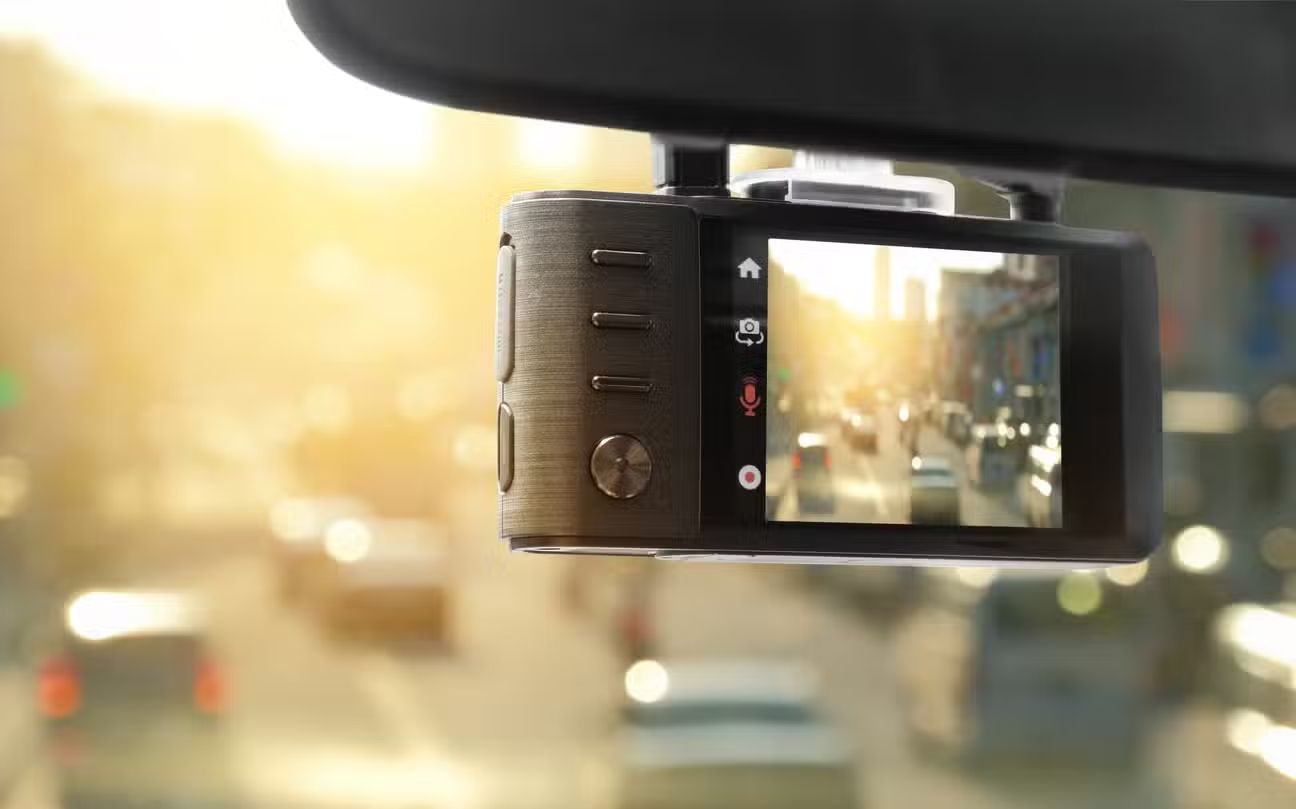
- Preserve event data recorder information when lawfully available.
- Use expert opinions on whether specific injuries would have changed with belt use.
Which 4 mistakes give the defense extra force?
The defense gains force when the record stays vague.
- Treat seat belt use as irrelevant because the other driver caused the crash.
- Ignore medical causation between restraint use and specific injuries.
- Repair or dispose of the vehicle before belt evidence is inspected.
- Assume the defense applies equally to every injury in the case.
How should this issue be handled before negotiation?
This issue should be handled by converting the rule into a dated evidence checklist. The driver should identify the triggering fact, collect the document that proves it, and ask the insurer to explain any coverage, deadline, or valuation position in writing. A California car accident lawyer can organize this record before the insurer’s position hardens.
Which 4 questions should the file answer?
The file should answer 4 questions before any release, repair authorization, denial, or valuation is accepted.
- Identify the statute, policy term, deadline, or coverage limit that controls the issue.
- Locate the document that proves the trigger fact, such as coverage, timing, identity, permission, or value.
- Confirm which insurer, public entity, driver, owner, platform, or repair shop has the next deadline.
- Decide which missing record would change the claim value if it were obtained now.
What does this mean for settlement value?
Settlement value changes when the issue shifts the claim from ordinary fault to a rule-based proof dispute. The injured person may need to prove coverage, preserve rights, meet a deadline, or correct a valuation before damages are discussed.
Which follow-up steps create proof?
These follow-up steps create a usable record.
- Send a short follow-up email after each claim phone call.
- Compare each insurer reason with documents, photographs, policy language, and deadlines.
- Request written confirmation before signing a release, accepting payment, or authorizing repairs.
- Store every document in a dated claim folder instead of separate email threads.
- Update the timeline when treatment, repairs, inspections, or agency responses change.
- Ask for the specific evidence the adjuster still needs to finish the review.
- Preserve the vehicle, footage, forms, and correspondence before routine deletion or disposal.
Which related California accident issues matter too?
California Black Box Evidence explains how event data can address belt status, speed, braking, and crash severity. California One-Tap Phone Rule can help prove why the defendant failed to react before impact. California Lane Splitting Accidents shows how comparative fault arguments also arise in motorcycle cases. A California car accident lawyer can separate crash fault from injury-causation evidence before settlement value is reduced.
What should injured people do next?
Injured people should preserve the vehicle, request reports, and document injuries before the defense narrative hardens. Seat belt arguments are technical. The strongest answer is a specific evidence file showing what happened, what injury occurred, and whether the belt would have changed that injury.

Michael Avanesian, the founder and driving force behind Avian Law Group, is a passionate and dedicated attorney with a strong background in personal injury law. As a partner at JT Legal Group, Michael led the growth of the personal injury practice from a single employee to a team of over ninety professionals, securing over $2 billion in settlements for clients in just three years.










.jpeg)

.jpeg)