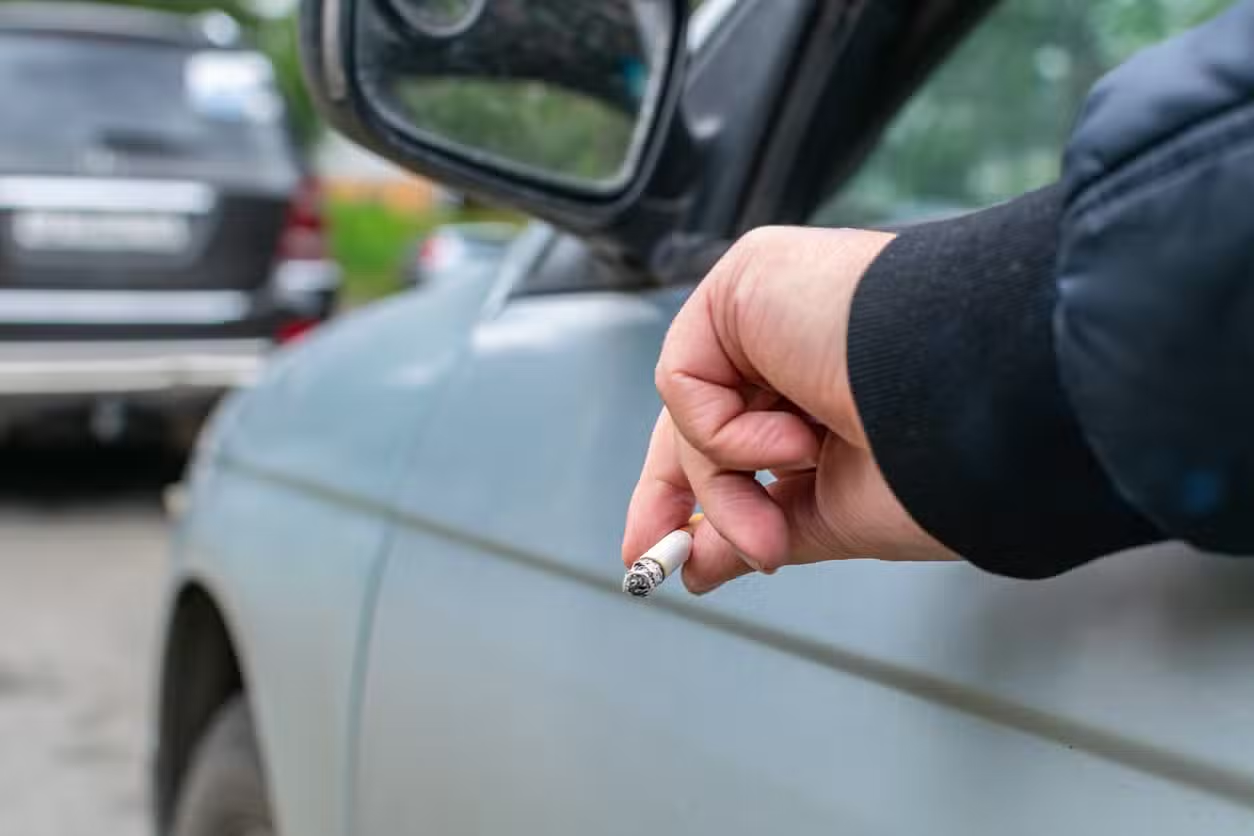

What is a California negligent entrustment claim?
A California negligent entrustment claim argues that the owner created a foreseeable danger by giving a vehicle to an unsafe driver. The focus is not only permission. The focus is whether the owner knew or should have known the driver was incompetent, reckless, intoxicated, unlicensed, or otherwise unfit.
Why is negligent entrustment different from permissive use?
Negligent entrustment is different because it targets the owner's own decision to provide the vehicle. Permissive use liability can arise from ownership and permission. Negligent entrustment adds knowledge, foreseeability, and the unreasonable choice to hand over the keys.
What is a common California example?
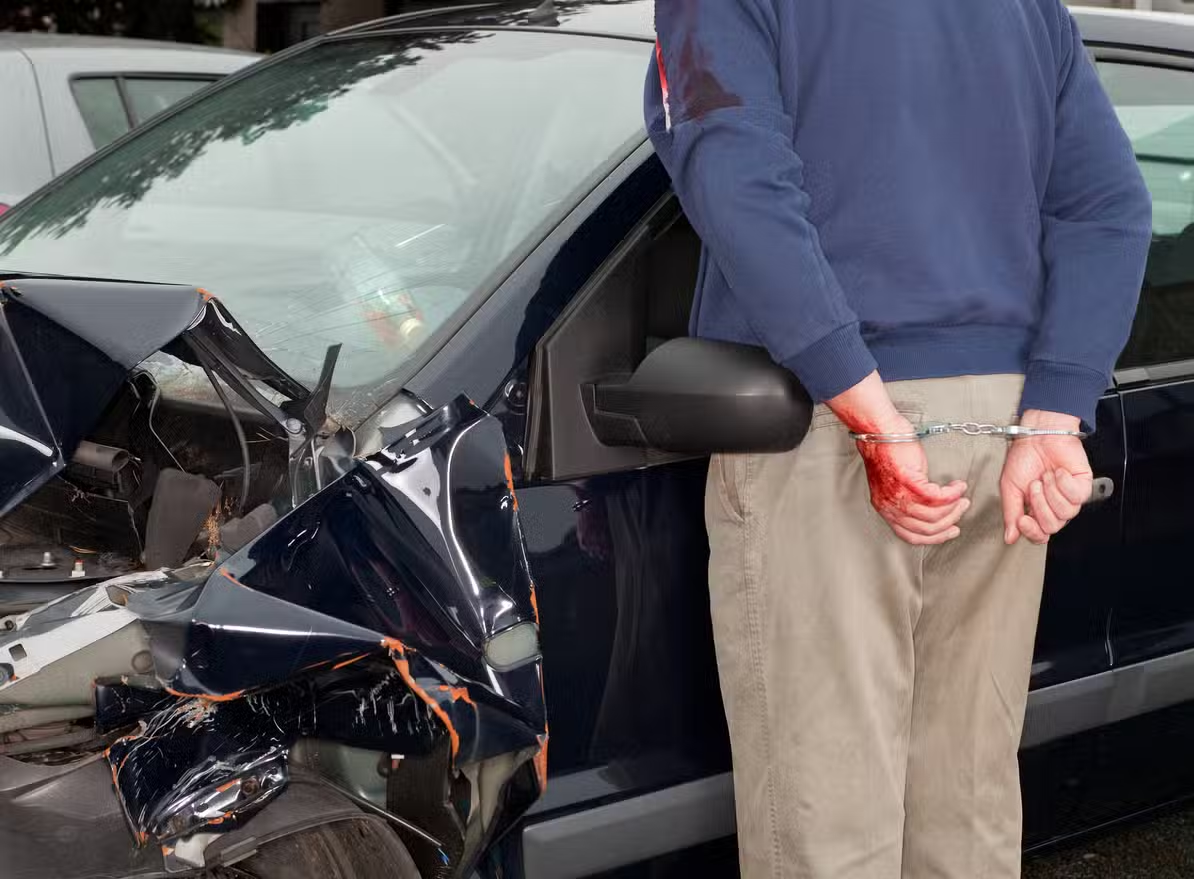
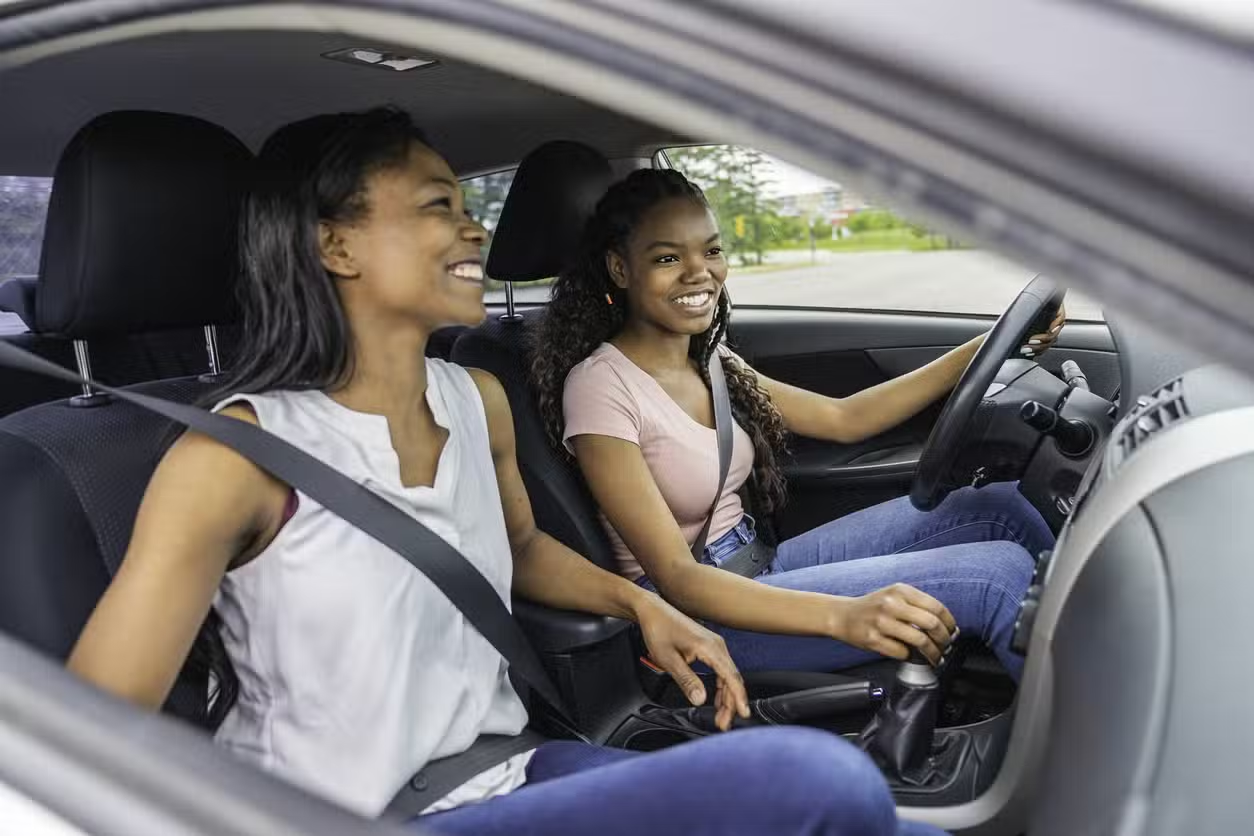
A parent knows an adult child has a suspended license and a recent DUI, but still provides the car for a night out. The child causes a crash. The injured person can pursue the driver for negligent driving and the parent for negligent entrustment because the lending decision created a predictable risk.
What evidence and mistakes matter most?
Which 5 records prove knowledge of risk?
The strongest negligent entrustment file shows the warning signs available before the crash.
- Obtain license records, suspension notices, and proof the driver lacked a valid license.
- Collect prior crash history, DUI history, tickets, and unsafe-driving complaints.
- Preserve texts, emails, and witness statements showing what the owner knew.
- Review policy documents, excluded-driver endorsements, and permission evidence.
- Request employer training records, vehicle-use rules, and complaint records in business cases.
Which 4 mistakes hide the key issue?
The key issue gets hidden when the case is treated as ordinary lending.
- Focus only on the crash and ignore pre-crash warnings about the driver.
- Assume permission is the same as negligent entrustment.
- Fail to investigate license status, intoxication, or prior incidents.
- Ignore business records when a company vehicle is involved.
How should this issue be handled before negotiation?
This issue should be handled by converting the rule into a dated evidence checklist. The driver should identify the triggering fact, collect the document that proves it, and ask the insurer to explain any coverage, deadline, or valuation position in writing. A California car accident lawyer can organize this record before the insurer’s position hardens.
Which 4 questions should the file answer?
The file should answer 4 questions before any release, repair authorization, denial, or valuation is accepted.
- Identify the statute, policy term, deadline, or coverage limit that controls the issue.
- Locate the document that proves the trigger fact, such as coverage, timing, identity, permission, or value.
- Confirm which insurer, public entity, driver, owner, platform, or repair shop has the next deadline.
- Decide which missing record would change the claim value if it were obtained now.
What does this mean for settlement value?
Settlement value changes when the issue shifts the claim from ordinary fault to a rule-based proof dispute. The injured person may need to prove coverage, preserve rights, meet a deadline, or correct a valuation before damages are discussed.
Which follow-up steps create proof?
These follow-up steps create a usable record.
- Send a short follow-up email after each claim phone call.
- Compare each insurer reason with documents, photographs, policy language, and deadlines.
- Request written confirmation before signing a release, accepting payment, or authorizing repairs.
- Store every document in a dated claim folder instead of separate email threads.
- Update the timeline when treatment, repairs, inspections, or agency responses change.
- Ask for the specific evidence the adjuster still needs to finish the review.
Which related California accident issues matter too?
California Permissive Use Liability explains the broader owner-liability rule that often appears in the same case. California 30/60/15 Insurance Minimums explains why available limits matter when both driver and owner are named. California One-Tap Phone Rule can supply distraction evidence if phone use was one of the unsafe-driving warnings. A California car accident lawyer can connect the owner's knowledge to the driver's crash conduct.
What should injured people do next?
Injured people should investigate the driver before and after the crash. Look for license problems, intoxication evidence, prior complaints, and texts showing warnings. The claim becomes stronger when it proves the owner had specific reasons to keep the driver away from the vehicle.

Michael Avanesian, the founder and driving force behind Avian Law Group, is a passionate and dedicated attorney with a strong background in personal injury law. As a partner at JT Legal Group, Michael led the growth of the personal injury practice from a single employee to a team of over ninety professionals, securing over $2 billion in settlements for clients in just three years.










.jpeg)

.jpeg)