
What is the 6-month deadline for government vehicle crashes?
The 6-month deadline generally requires a government claim to be presented within 6 months for death, personal injury, or personal property damage involving a public entity. This administrative claim is different from an insurance claim and different from a lawsuit.
Why does an ordinary insurance habit create risk?
An ordinary insurance habit creates risk because private-driver claims often involve months of treatment and negotiation. Public-entity claims require earlier deadline control. A person can be speaking with a risk-management office or adjuster and still fail to submit the required government claim on time.
What is a common California public-vehicle example?
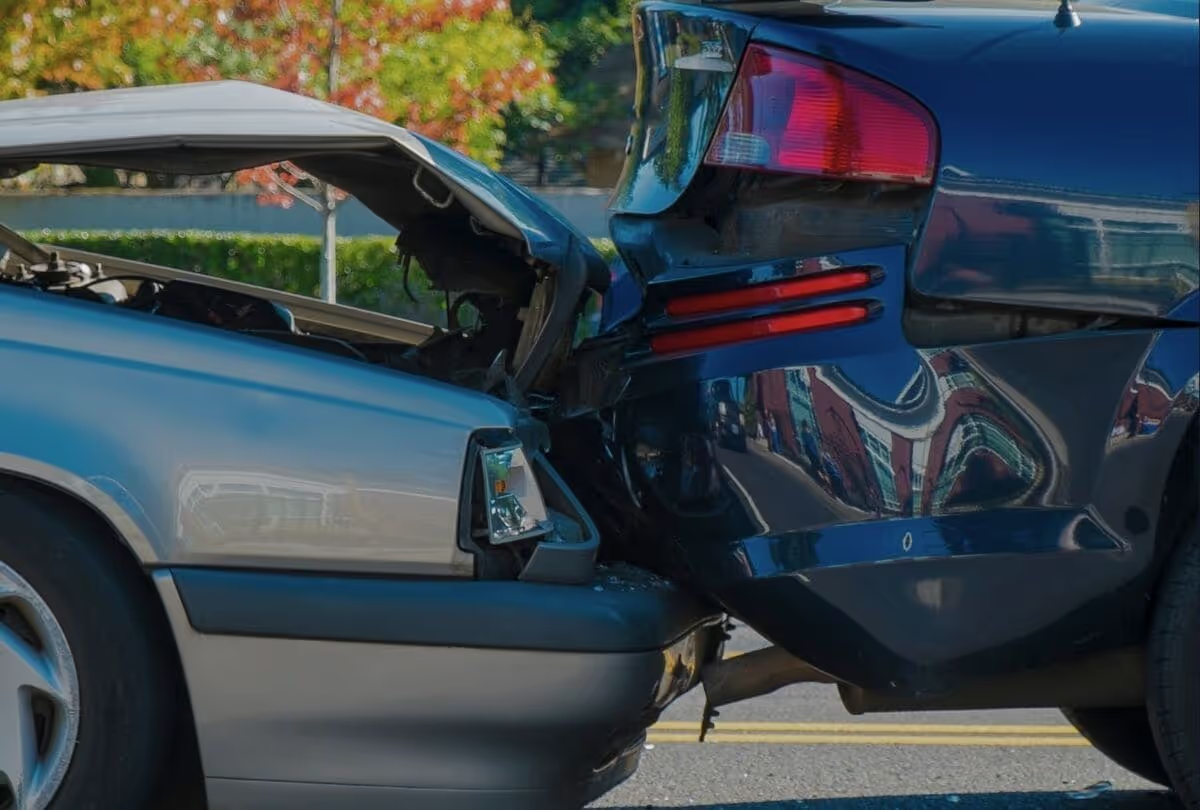
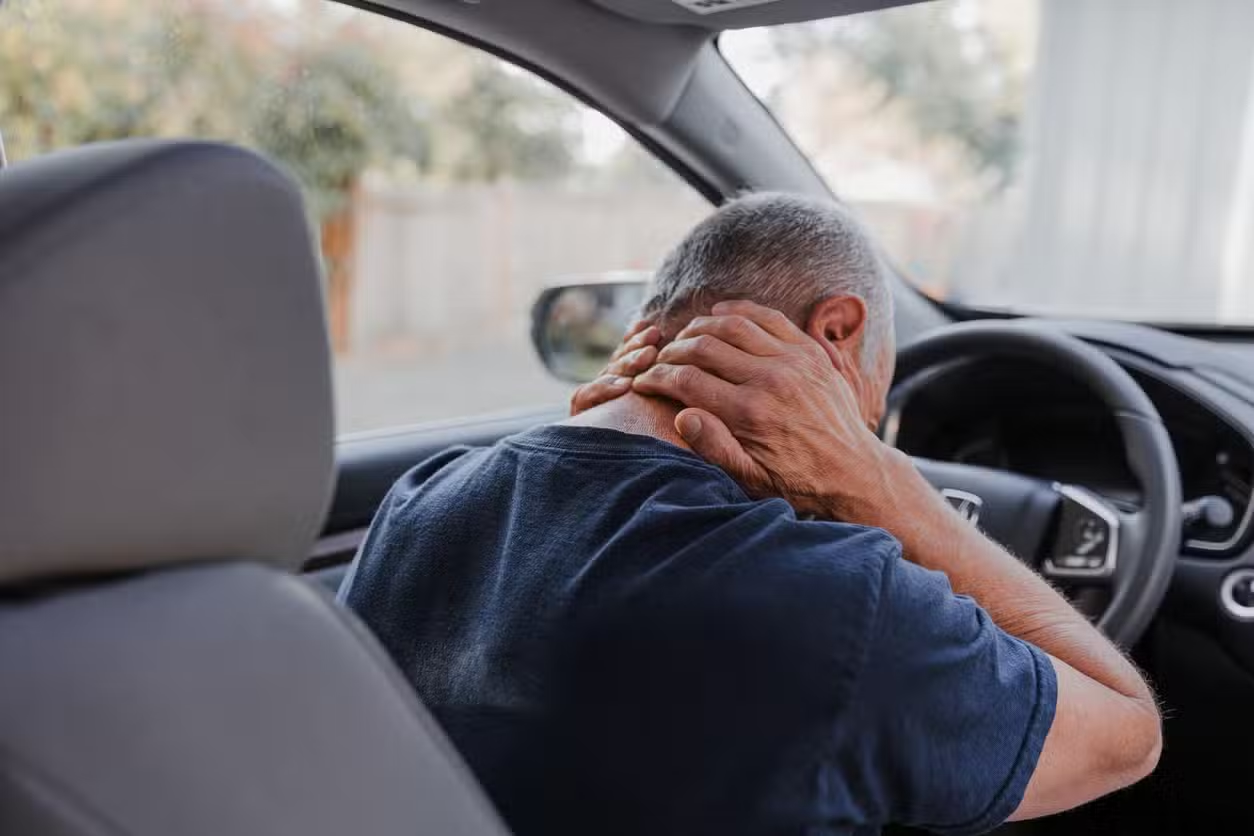
A driver is hit by a city maintenance truck in March. The driver treats for neck and shoulder injuries and waits for the city's insurer to evaluate the claim. By October, the driver learns no formal government claim was filed within 6 months. The missed administrative step can threaten the entire case.
What evidence and mistakes matter most?
Which 5 records protect the deadline?
The strongest public-entity file proves the correct entity and timely presentation.
- Save the government claim form, proof of submission, and delivery confirmation.
- Identify the agency through police reports, incident reports, unit numbers, and fleet numbers.
- Photograph government logos, license plates, vehicle markings, and scene conditions.
- Keep medical records, property estimates, wage records, and repair invoices.
- Track rejection letters, no-response dates, and lawsuit deadline calculations.
Which 4 mistakes create deadline traps?
Deadline traps appear when a public crash is treated like a private crash.
- Assume an agency incident report equals a government claim.
- File with the wrong city, county, state agency, school district, or transit authority.
- Wait for treatment to finish before presenting the administrative claim.
- Miss the lawsuit deadline after the government claim is rejected.
How should this issue be handled before negotiation?
This issue should be handled by converting the rule into a dated evidence checklist. The driver should identify the triggering fact, collect the document that proves it, and ask the insurer to explain any coverage, deadline, or valuation position in writing. A government vehicle accident lawyer can organize this record before the insurer’s position hardens.
Which 4 questions should the file answer?
The file should answer 4 questions before any release, repair authorization, denial, or valuation is accepted.
- Identify the statute, policy term, deadline, or coverage limit that controls the issue.
- Locate the document that proves the trigger fact, such as coverage, timing, identity, permission, or value.
- Confirm which insurer, public entity, driver, owner, platform, or repair shop has the next deadline.
- Decide which missing record would change the claim value if it were obtained now.
What does this mean for settlement value?
Settlement value changes when the issue shifts the claim from ordinary fault to a rule-based proof dispute. The injured person may need to prove coverage, preserve rights, meet a deadline, or correct a valuation before damages are discussed.
Which follow-up steps create proof?
These follow-up steps create a usable record.
- Send a short follow-up email after each claim phone call.
- Compare each insurer reason with documents, photographs, policy language, and deadlines.
- Request written confirmation before signing a release, accepting payment, or authorizing repairs.
- Store every document in a dated claim folder instead of separate email threads.
- Update the timeline when treatment, repairs, inspections, or agency responses change.
- Ask for the specific evidence the adjuster still needs to finish the review.
Which related California accident issues matter too?
California Emergency Vehicle Crashes explains how police, fire, and ambulance cases add emergency-exemption issues to the deadline problem. California 40-Day Insurance Claim Rule is useful for private insurance timelines but does not replace government claim rules. California Total Loss Disputes helps organize property-damage proof while the administrative deadline is pending. A government vehicle accident lawyer can identify the correct public entity before the 6-month clock expires.
What should injured people do next?
Injured people should assume every city, county, state, school, transit, or public-agency vehicle triggers a deadline check. Identify the entity, file the correct claim, and keep proof of delivery. The claim can still require liability and damages proof, but no evidence helps if the required notice is late.

Michael Avanesian, the founder and driving force behind Avian Law Group, is a passionate and dedicated attorney with a strong background in personal injury law. As a partner at JT Legal Group, Michael led the growth of the personal injury practice from a single employee to a team of over ninety professionals, securing over $2 billion in settlements for clients in just three years.










.jpeg)

.jpeg)