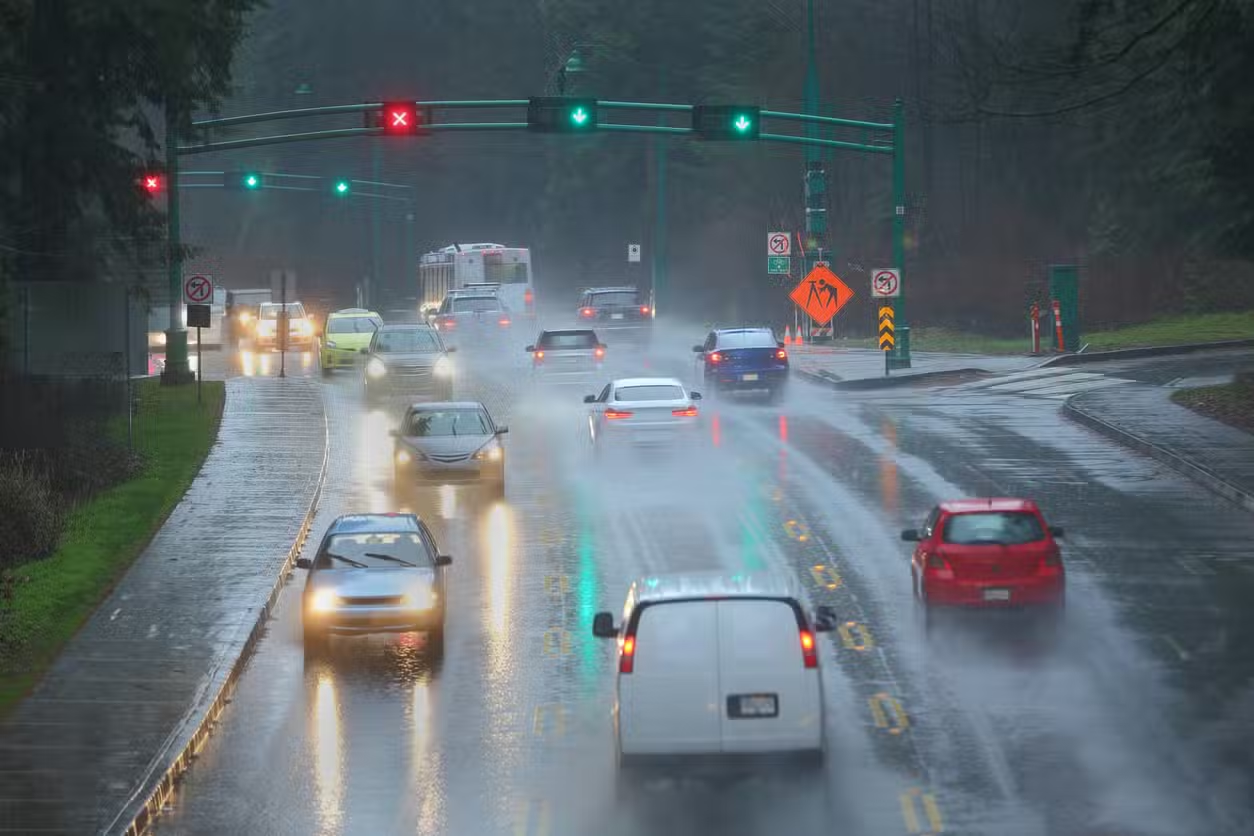
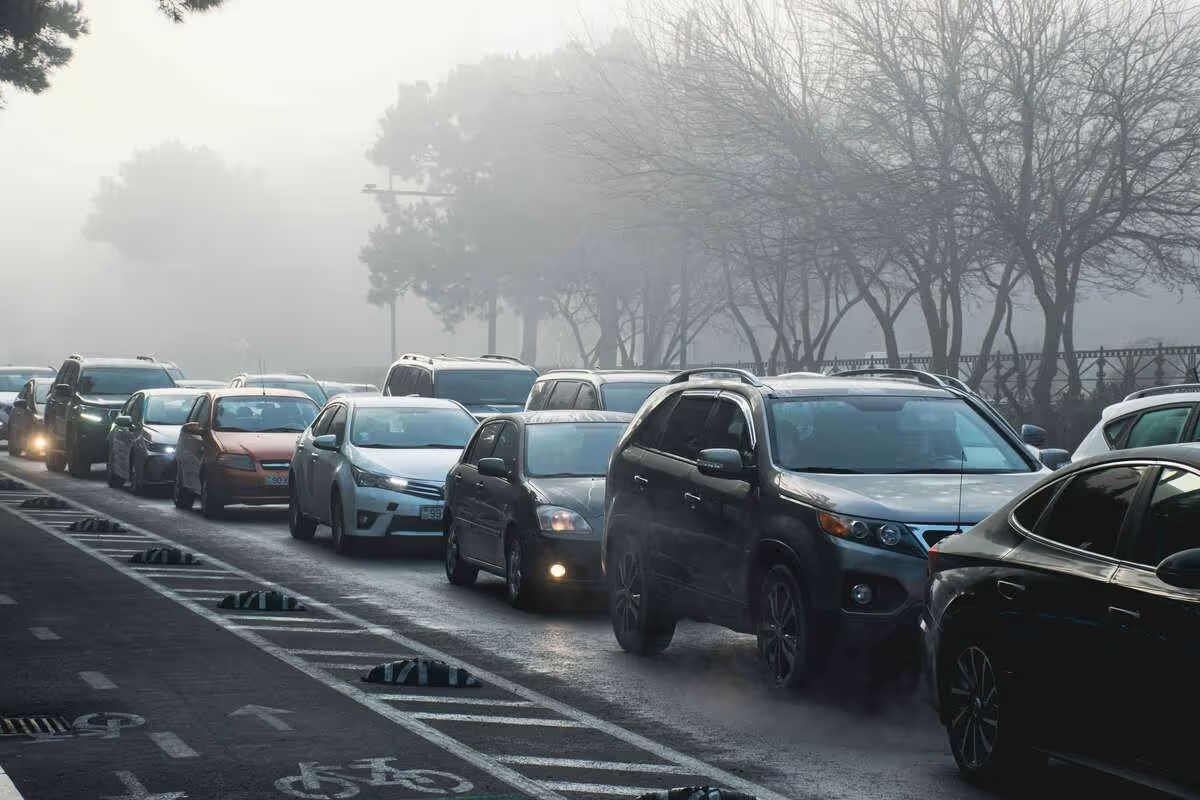
California drivers often assume that accidents caused by rain, fog, or other adverse weather conditions are nobody's fault and that liability cannot be established when weather was a contributing factor. This assumption is incorrect. California law holds drivers to a standard of reasonable care under the actual conditions present on the road at the time of the collision, not ideal conditions. A driver who speeds through heavy rain, follows too closely in fog, or fails to adjust their driving to account for reduced visibility or slippery pavement is negligent even though the weather contributed to the outcome. Understanding how fault is assigned in weather-related accidents is essential to knowing whether you have a viable claim and what evidence will be required to establish liability.

The Reasonable Driver Standard in Adverse Conditions
California Vehicle Code Section 22350, known as the basic speed law, requires drivers to operate their vehicles at a speed that is reasonable and prudent given the current conditions including weather, visibility, traffic, and road surface. This requirement applies regardless of the posted speed limit. Driving at 65 mph on a freeway in dense fog that reduces visibility to 50 feet, even if 65 mph is the posted limit, may be unreasonable under the conditions and can establish negligence if the driver causes an accident as a result.
Beyond speed, reasonable care in adverse weather requires:
- Adjusting following distance to account for longer stopping distances on wet or icy pavement
- Ensuring that headlights, taillights, and windshield wipers are functioning properly and are in use when conditions require them
- Reducing speed on curves and when changing lanes because wet pavement reduces traction and increases the risk of losing control
- Pulling over and waiting if visibility falls below a level where safe driving is possible
- Avoiding sudden braking or steering inputs that can cause the vehicle to skid on slippery surfaces
Failing any of these reasonable precautions can support a negligence finding even when the weather was objectively bad. The question is not whether conditions were difficult but whether the driver adjusted their behavior appropriately given those conditions.

How Fault Is Actually Analyzed in Weather Cases
Our article specifically examining car accidents in bad weather and who is at fault covers the full factual analysis that applies to weather-related collisions. The investigation typically centers on several key factors including the driver's speed relative to conditions, vehicle maintenance relevant to weather performance such as tire tread depth and wiper condition, driver behavior immediately preceding the impact, and road condition records from state and local transportation agencies that document whether the road surface was wet, icy, or otherwise compromised at the time.
Proving the at-fault driver was traveling too fast for conditions typically requires accident reconstruction. Experts analyze the physical evidence including skid marks, the final position of vehicles, damage patterns, and road surface conditions to estimate speed at the time of impact. They then compare that speed to what a reasonable driver would have maintained given the visibility, road surface, and traffic conditions. Weather reports from the National Weather Service or local news stations can document the conditions at the time and location of the collision.
Witness testimony about the driver's behavior before the collision is also valuable. Did the driver appear to be driving cautiously or recklessly given the conditions? Were their headlights on? Were they tailgating despite reduced visibility? Did they attempt to brake before the collision? All of these observations help establish whether the driver exercised reasonable care.
When Multiple Parties Share Fault in Weather Accidents
Weather accidents frequently involve scenarios where both drivers bear some responsibility for the collision. One driver may have been speeding for conditions while the other failed to use headlights in heavy rain, or both drivers were following too closely given the wet pavement. California's pure comparative fault system allows recovery even when the injured party was partially at fault. Our analysis of how comparative negligence affects car accident compensation explains how damages are reduced proportionally by the plaintiff's share of fault and why building the strongest possible case for the other driver's greater responsibility is essential to maximizing recovery.
Insurance companies routinely use weather as an excuse to argue high percentages of comparative fault against injured claimants. They will argue that anyone driving in bad weather assumes some risk and that both drivers contributed equally to the collision simply by being on the road in those conditions. This argument is legally unsound but is raised frequently because it reduces settlement values if the claimant accepts it. Effective rebuttal requires evidence that the other driver was driving unreasonably while you were exercising appropriate caution given the conditions.

Government Liability for Road Conditions
In some weather-related accidents, the road condition itself rather than driver behavior is the primary cause. Inadequate drainage that allows standing water to accumulate and causes hydroplaning, the absence of warning signs on a stretch of highway that is chronically foggy or icy, or a defective road surface that becomes unusually slippery when wet can all support a claim against the government entity responsible for maintaining the roadway.
Government liability claims in California have a strict 6-month deadline for filing an administrative claim with the public entity before a lawsuit can be filed. This deadline is substantially shorter than the standard 2-year personal injury statute of limitations and applies to claims against state, county, and city governments. Missing this deadline permanently bars the claim regardless of its merits. If you believe road conditions contributed to your accident, acting quickly to investigate and file the required claim is essential.
A car accident attorney can evaluate every contributing cause in a weather-related collision, identify all potentially liable parties including government entities when road conditions were a factor, obtain weather records and road maintenance logs through public records requests, hire reconstruction experts to establish what speed was reasonable under the conditions, and ensure that every legal deadline is met while building a complete evidentiary record that establishes the other driver's fault and minimizes arguments about your comparative responsibility.

Michael Avanesian, the founder and driving force behind Avian Law Group, is a passionate and dedicated attorney with a strong background in personal injury law. As a partner at JT Legal Group, Michael led the growth of the personal injury practice from a single employee to a team of over ninety professionals, securing over $2 billion in settlements for clients in just three years.











.jpeg)

.jpeg)