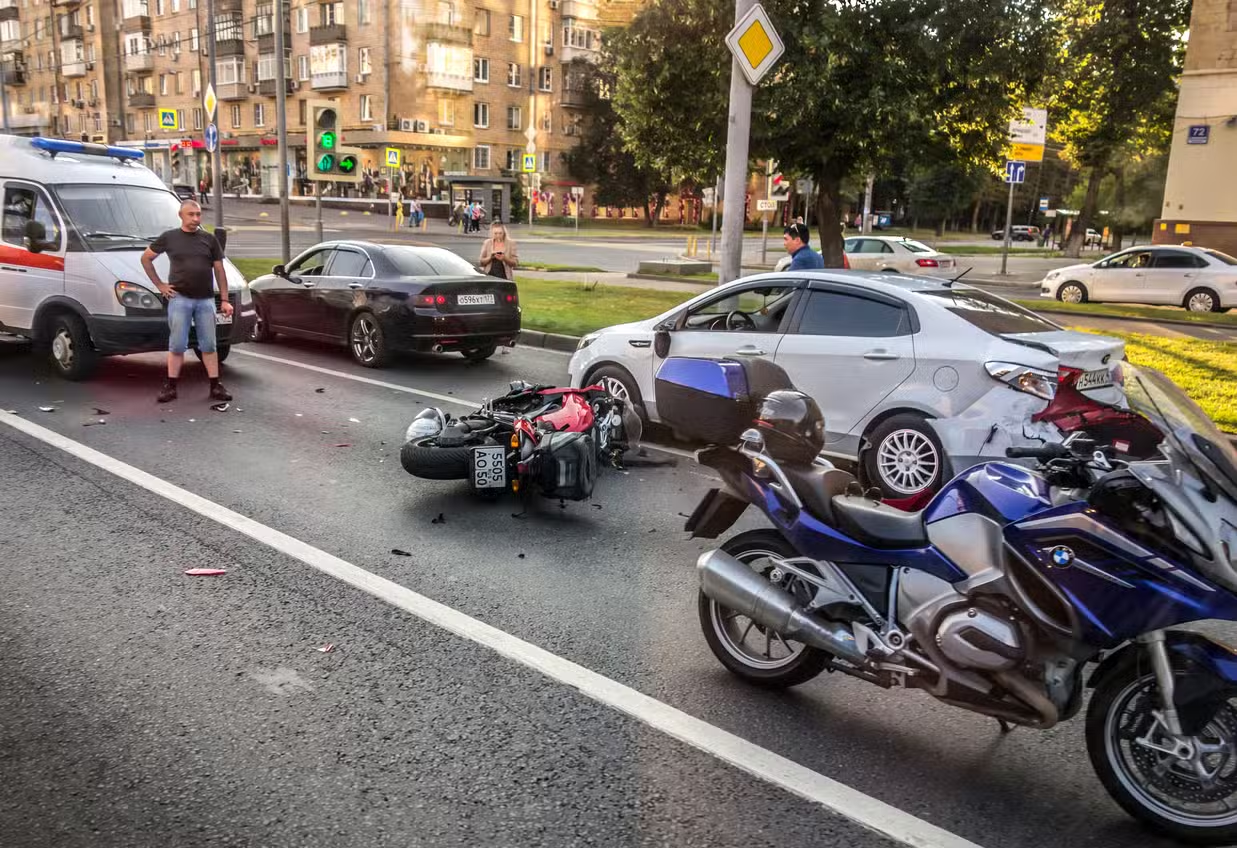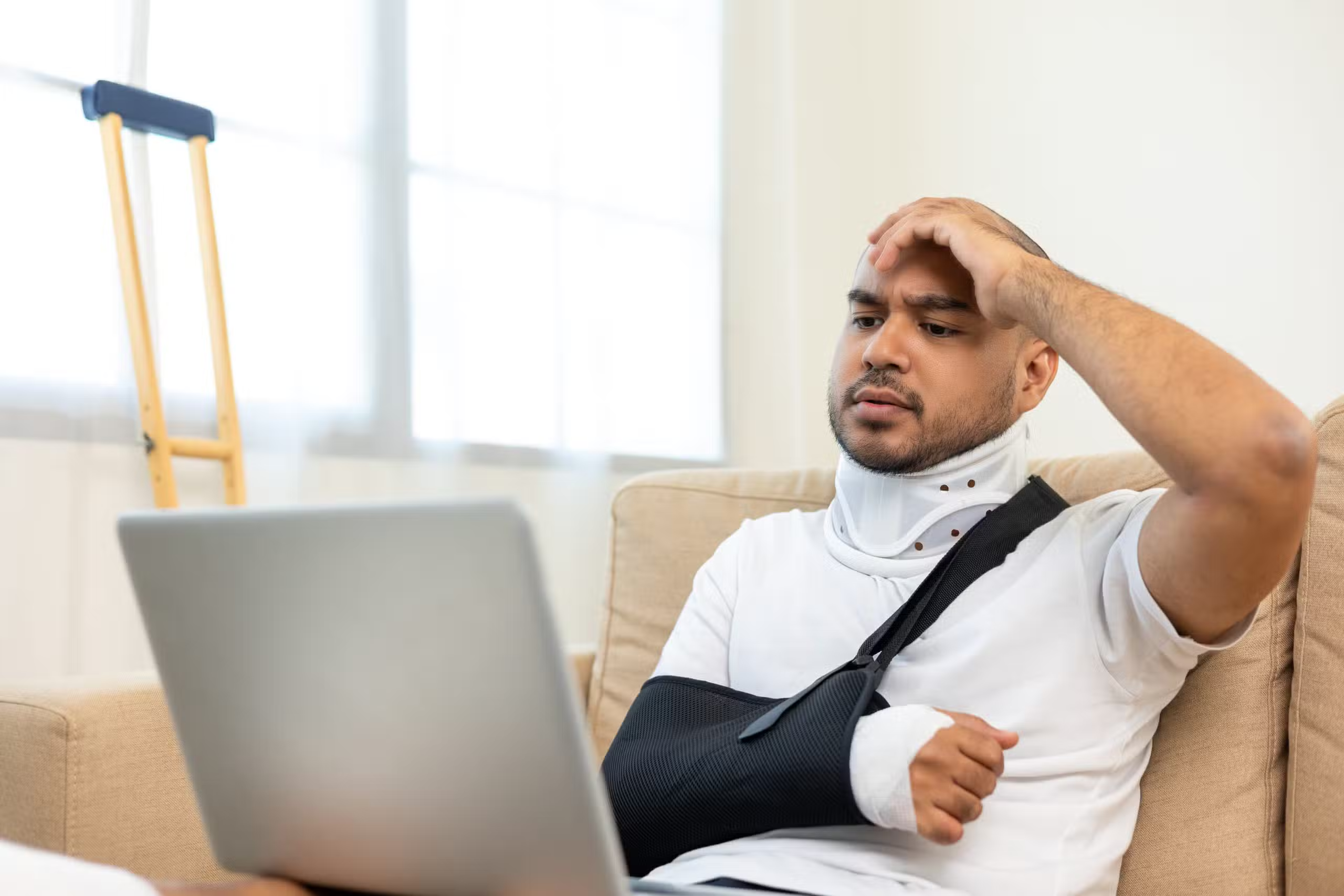

Distracted driving caused by phone use is one of the leading causes of car accidents in California despite strict laws prohibiting handheld phone use while driving. Thousands of California drivers are involved in collisions caused by texting, browsing, or using a device each year. When one of those collisions injures you, proving that distraction caused the accident requires specific evidence that is different from what a standard rear-end or intersection collision case requires. Understanding what evidence matters and how to preserve it immediately after the collision is essential to establishing liability and recovering full compensation.
California Law on Distracted Driving
California Vehicle Code Section 23123.5 prohibits drivers from holding or using a handheld wireless device while driving. The prohibition covers all handheld use including making phone calls, sending or reading text messages, browsing the internet, using apps, and any other handheld interaction with a wireless device. Hands-free use through voice commands or Bluetooth is permitted. Violations carry fines of 20 dollars for a first offense and 50 dollars for subsequent offenses, but these base fines increase substantially with assessments and fees, and violations are subject to enhanced penalties if they cause injury.
A distracted driving violation is relevant to personal injury litigation in two important ways. First, it can establish negligence per se, meaning the statutory violation itself proves the driver breached their duty of care without requiring further argument about whether their conduct was reasonable. Second, even in cases where negligence per se does not apply, evidence of phone use at the time of the collision is powerful proof of fault that juries find highly persuasive.
How to Prove a Driver Was Texting
Proving phone use at the time of a collision requires evidence beyond the injured party's observation or belief. A driver who was texting will not voluntarily admit it, and simply claiming they were on their phone is not sufficient without supporting evidence. The most reliable evidence comes from the driver's phone records obtained through the legal discovery process.
Cell phone records obtained through subpoena show the exact timestamp of every call made or received, every text message sent or received, and every data transmission including app usage and internet browsing. Comparing those timestamps to the exact time of the collision, which is documented in the police report and by witness accounts, can establish that the driver was actively using their device at the moment of impact or in the seconds immediately before.
Carriers retain call and text records for varying periods, typically 1 to 7 years depending on the carrier and the type of record. Data transmission records showing app usage and internet activity are retained for shorter periods, often 90 days to 1 year. This evidence must be preserved quickly through a formal preservation demand sent to the carrier before routine data retention policies result in the records being deleted.
Witness testimony is also valuable evidence of distracted driving. Passengers in either vehicle, drivers in adjacent vehicles, pedestrians, or other bystanders who observed the at-fault driver looking down at a phone, holding a phone, or appearing distracted in the moments before the collision can provide testimony that corroborates the phone records. Our resource on how a witness statement strengthens a car accident case explains how to identify potential witnesses at the scene, how to approach them appropriately to request their contact information and a brief statement, and how witness testimony is used during settlement negotiations and at trial when the defense disputes that distraction caused the collision.
Physical Evidence of Distracted Driving
Physical evidence of distraction often appears in the collision pattern itself. A driver who did not brake before impact, whose vehicle shows no pre-impact steering correction or evasive maneuvering, and who struck a stationary or clearly visible vehicle or object is exhibiting the classic hallmarks of inattention. Our guide to proving negligence in a California car accident covers the full range of physical and documentary evidence relevant to establishing how a collision occurred and what the driver was doing in the moments before impact.
Event data recorder information from the at-fault vehicle, which modern cars record automatically, captures speed, braking, throttle position, and steering inputs in the seconds before a collision. This data can corroborate the conclusion that the driver did not respond appropriately to traffic conditions in the way that an attentive driver would have. The absence of any braking before a rear-end collision, for example, strongly suggests the driver was not looking at the road.
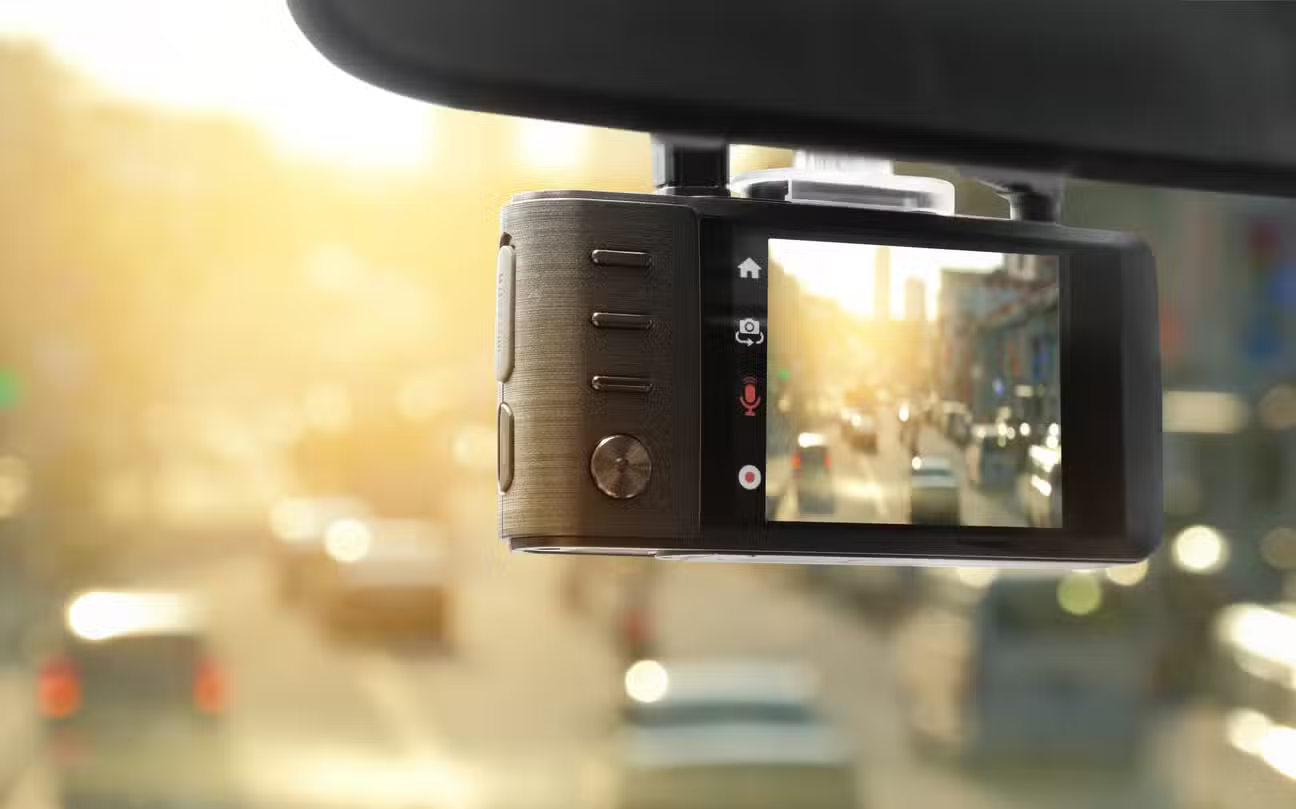
Dashcam footage from your vehicle, the at-fault driver's vehicle, or other vehicles nearby can provide direct visual evidence of the driver looking down at a phone or holding a phone at the time of the collision. Many newer vehicles are equipped with dashcams, and many drivers install aftermarket dashcams for exactly this purpose. If dashcam footage exists, it must be preserved immediately because it is typically stored on SD cards or internal memory that gets overwritten as new footage is recorded.
The Challenge of Proving Causation
Even when phone records establish that the driver was using their device at the time of the collision, the driver or their insurance company may argue that the phone use did not cause the collision. They may claim that the collision would have happened anyway due to other factors, or that their brief glance at the phone was not the reason they failed to see your vehicle.
Overcoming this argument requires connecting the phone use to the specific failure that caused the collision. If the driver rear-ended you while you were stopped at a red light, phone records showing they were reading a text message at the moment of impact combined with the absence of any braking before impact makes a compelling case that distraction prevented them from seeing that traffic had stopped. If the driver ran a red light and hit you in an intersection, phone records showing they were on a call combined with witness testimony that they did not slow down or appear to notice the signal strongly suggests they were not paying attention to traffic controls.
If you were injured by a distracted driver in California, a car accident attorney can subpoena phone records from the at-fault driver's carrier before they are deleted, obtain event data recorder information from the vehicle, identify and preserve witness testimony, hire accident reconstruction experts when necessary to establish the causal link between distraction and the collision, and build the complete evidentiary foundation needed to prove that distraction caused the accident and that you are entitled to full compensation for your injuries.

Michael Avanesian, the founder and driving force behind Avian Law Group, is a passionate and dedicated attorney with a strong background in personal injury law. As a partner at JT Legal Group, Michael led the growth of the personal injury practice from a single employee to a team of over ninety professionals, securing over $2 billion in settlements for clients in just three years.











.jpeg)

.jpeg)