
Do sirens give emergency vehicles total immunity?
Sirens do not give emergency vehicles total immunity. California law can provide privileges to authorized emergency vehicles during emergency response, but the driver still must operate with due regard for public safety. The exemption has conditions and limits.
What conditions matter in an emergency vehicle crash?
The key conditions include the type of emergency, use of required warning devices, speed, visibility, traffic density, intersection control, and whether the driver acted reasonably. A police car, fire engine, ambulance, or public agency vehicle can create both a liability issue and a government-claim deadline issue.
What is a common California emergency-vehicle example?
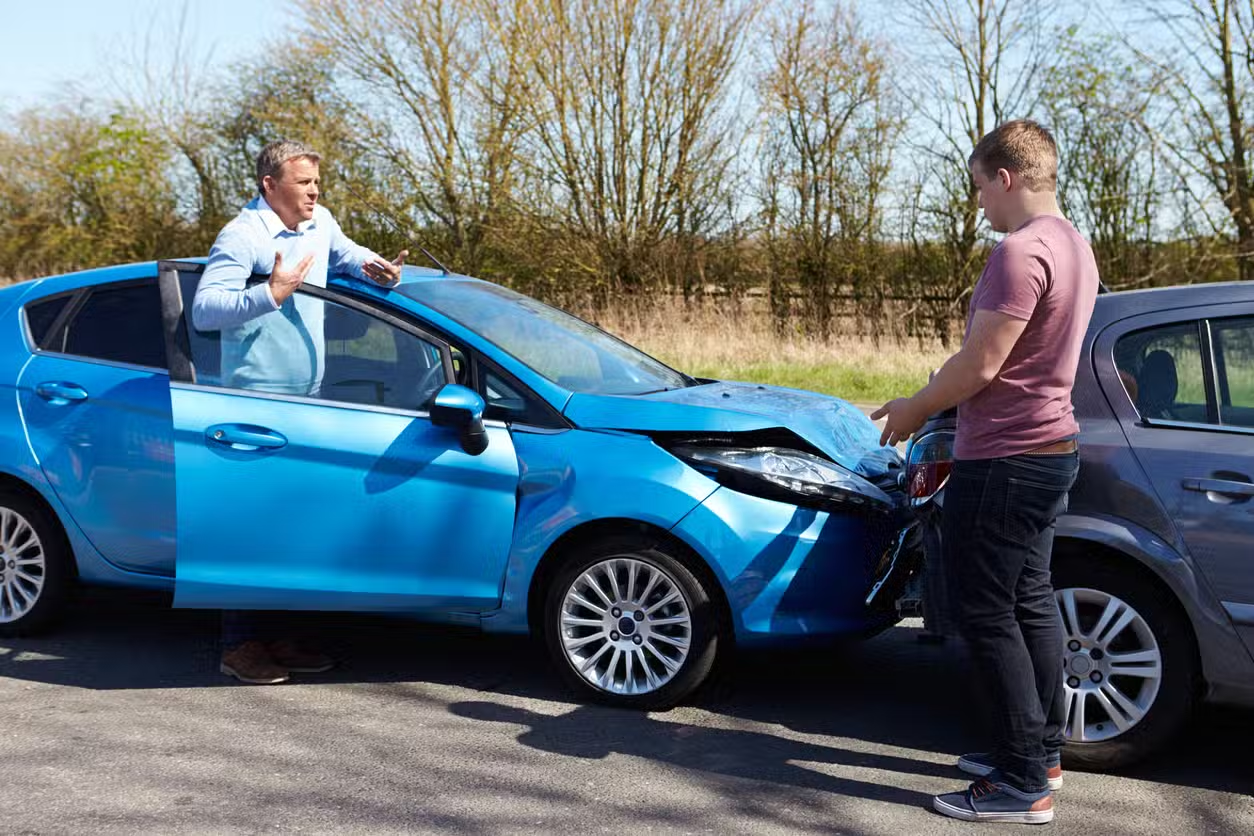
An ambulance enters an intersection against a red light while responding to a call and collides with a sedan. The lights were active, but witnesses disagree about whether the siren was audible. The sedan driver says traffic blocked the view. The case turns on warning devices, sightlines, speed, and due regard.
What evidence and mistakes matter most?
Which 5 records prove emergency response facts?
The strongest file combines agency records with independent scene evidence.
- Request dispatch logs, CAD records, emergency call details, and response codes.
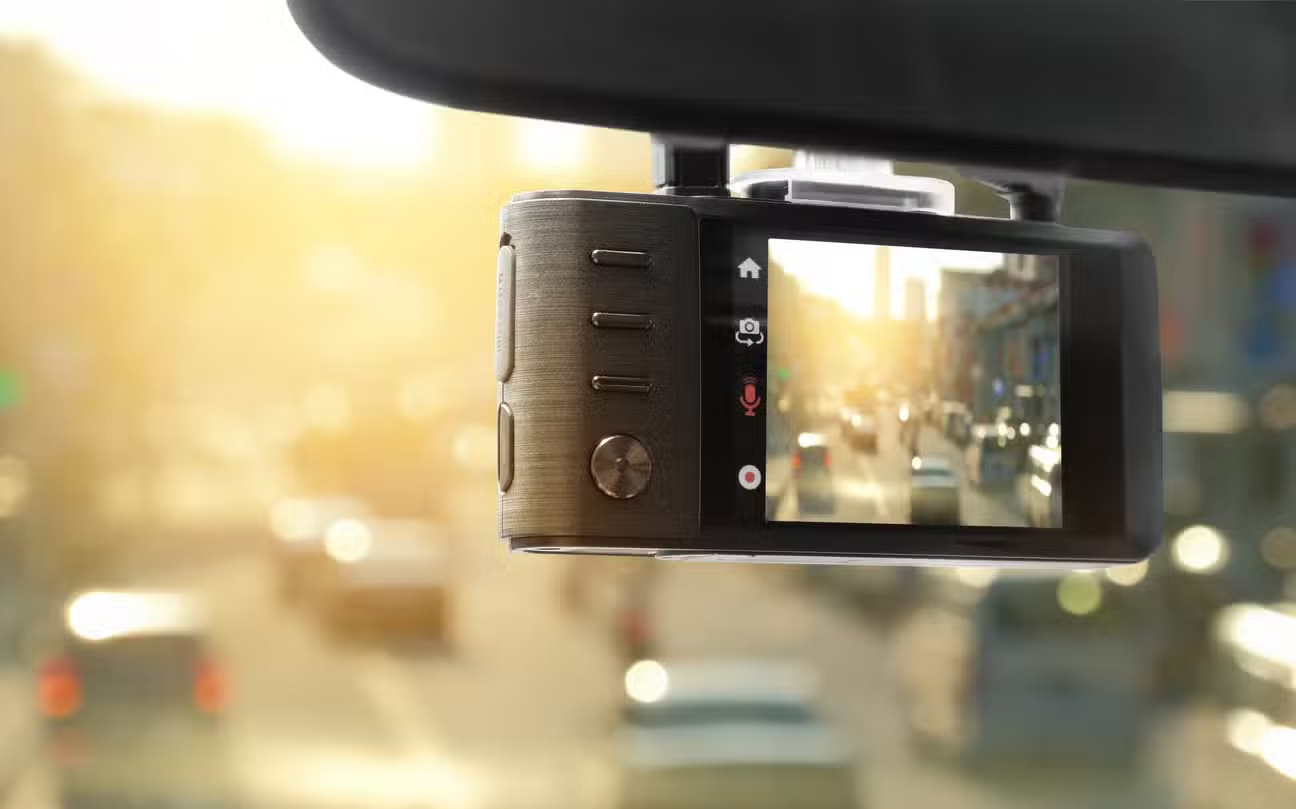
- Preserve dash camera, body camera, vehicle camera, intersection camera, and surveillance video.
- Collect witness statements about siren, lights, speed, traffic, and visibility.
- Obtain agency policies for emergency response, intersection entry, and pursuits.
- Keep government claim forms and proof of timely submission.
Which 4 mistakes hurt these claims?
Emergency-vehicle claims suffer when they are handled like ordinary insurer claims.
- Assume lights and sirens automatically defeat the case.
- Miss public-entity claim deadlines while waiting for an adjuster.
- Ignore agency policies and dispatch records.
- Fail to preserve intersection video before deletion.
How should this issue be handled before negotiation?
This issue should be handled by converting the rule into a dated evidence checklist. The driver should identify the triggering fact, collect the document that proves it, and ask the insurer to explain any coverage, deadline, or valuation position in writing. A government vehicle accident lawyer can organize this record before the insurer’s position hardens.
Which 4 questions should the file answer?
The file should answer 4 questions before any release, repair authorization, denial, or valuation is accepted.
- Identify the statute, policy term, deadline, or coverage limit that controls the issue.
- Locate the document that proves the trigger fact, such as coverage, timing, identity, permission, or value.
- Confirm which insurer, public entity, driver, owner, platform, or repair shop has the next deadline.
- Decide which missing record would change the claim value if it were obtained now.
What does this mean for settlement value?
Settlement value changes when the issue shifts the claim from ordinary fault to a rule-based proof dispute. The injured person may need to prove coverage, preserve rights, meet a deadline, or correct a valuation before damages are discussed.
Which follow-up steps create proof?
These follow-up steps create a usable record.
- Send a short follow-up email after each claim phone call.
- Compare each insurer reason with documents, photographs, policy language, and deadlines.
- Request written confirmation before signing a release, accepting payment, or authorizing repairs.
- Store every document in a dated claim folder instead of separate email threads.
- Update the timeline when treatment, repairs, inspections, or agency responses change.
- Ask for the specific evidence the adjuster still needs to finish the review.
- Preserve the vehicle, footage, forms, and correspondence before routine deletion or disposal.
- Review the final payment against every documented damage category before closing the file.
Which related California accident issues matter too?
California Government Vehicle Claims explains the 6-month administrative claim deadline that often applies to public entities. California One-Tap Phone Rule can matter when distraction by any driver contributed to the crash. California Black Box Evidence can help prove speed, braking, and seat belt facts. A government vehicle accident lawyer can evaluate both the emergency exemption and the deadline before the file closes.
What should injured people do next?
Injured people should identify the agency, preserve video, request reports, and calendar the public-entity deadline immediately. Emergency context matters, but it is not the whole case. The practical question is whether the driver satisfied the statutory conditions and used reasonable care under the emergency conditions.

Michael Avanesian, the founder and driving force behind Avian Law Group, is a passionate and dedicated attorney with a strong background in personal injury law. As a partner at JT Legal Group, Michael led the growth of the personal injury practice from a single employee to a team of over ninety professionals, securing over $2 billion in settlements for clients in just three years.










.jpeg)

.jpeg)