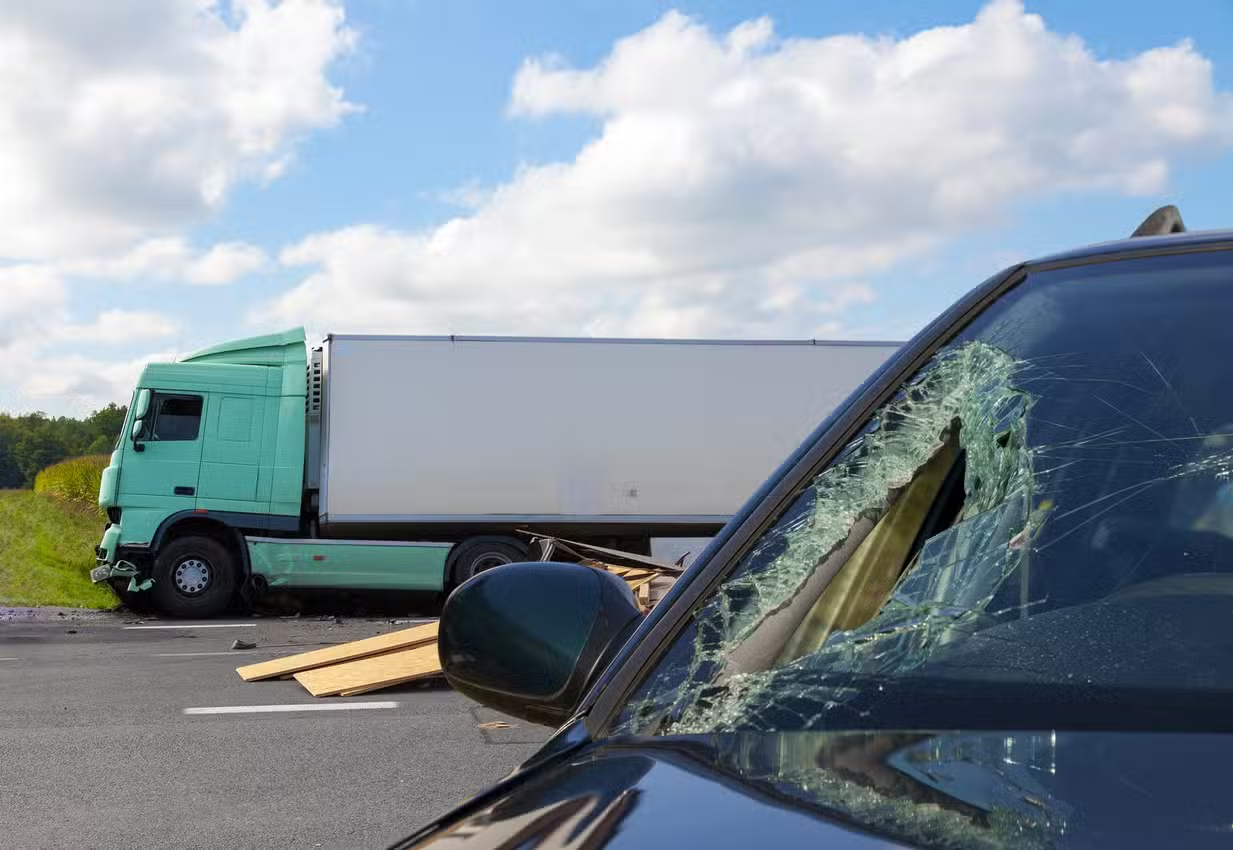

Delivery vehicles are ubiquitous on California roads, and accidents involving them raise liability questions that are more complicated than a standard car accident between two private individuals. Whether the driver worked for a national carrier like UPS or FedEx, a third-party logistics company contracted by Amazon, or a gig platform like DoorDash, the question of who is legally responsible for the accident depends on the specific employment and contractual structure involved. Understanding these structures is essential to identifying all potentially liable parties and all available sources of insurance coverage.

Traditional Carriers: UPS, FedEx, USPS
Drivers employed directly by UPS, FedEx, or the United States Postal Service are employees of those companies. Under the legal doctrine of respondeat superior, an employer is vicariously liable for the negligent acts of an employee committed within the scope of their employment. A UPS driver making deliveries who causes a collision is almost certainly acting within the scope of employment, making UPS directly liable for the damages.
These companies carry substantial commercial insurance policies with high limits, often in the millions of dollars per accident. However, their claims teams are experienced at limiting exposure through aggressive defense tactics. They make initial contact with injured parties within hours or days of an accident, often before the injured person has even been released from the hospital or understands the full extent of their injuries. The goal is to obtain recorded statements and make early settlement offers that close the claim for far less than it is actually worth.
Getting legal representation before speaking with these claims teams is strongly advisable. Once you have provided a recorded statement or accepted a settlement check, you have given up leverage that cannot be recovered.
Amazon Delivery Partners: A More Complex Structure
Amazon has increasingly shifted its last-mile delivery operations to Delivery Service Partners, which are independent businesses that contract with Amazon to operate delivery routes under Amazon's branding and operational control. When an Amazon DSP driver causes an accident, the immediate legal question is whether Amazon itself bears any liability or whether the claim is limited to the DSP company that technically employs the driver.
Courts have increasingly held that Amazon exercises sufficient control over DSP operations to create vicarious liability for the actions of DSP drivers. Amazon monitors driver behavior in real time through vehicle telematics, evaluates driver performance through its own scoring systems, has the authority to remove individual drivers from routes, and dictates the specific procedures drivers must follow. This level of control looks much more like an employment relationship than a true independent contractor arrangement.
The insurance layering in Amazon delivery accidents is particularly complex because multiple policies may apply. Understanding how California trucking regulations and independent contractor classifications affect liability helps clarify when the contracting company retains responsibility despite using nominally independent operators. The DSP carries its own commercial auto insurance, and Amazon carries additional coverage that may apply depending on the specific facts of the accident.

Gig Economy Drivers: DoorDash, Instacart, Gopuff
Gig delivery platforms like DoorDash, Instacart, and Gopuff classify their drivers as independent contractors, which is a deliberate business structure designed to limit direct vicarious liability for driver negligence. However, the platforms carry commercial auto insurance policies that apply during active delivery periods. The insurance structure for gig drivers shares many characteristics with rideshare insurance. Our breakdown of how insurance works across rideshare, scooter, and delivery platforms explains the coverage layers, when each policy applies, and what happens in the gaps between coverage periods.
If the driver was between deliveries and not actively on a delivery run, their personal auto insurance may be the only coverage that applies. If they were actively on a delivery, meaning they had accepted an order and were either traveling to pick it up or delivering it to the customer, the platform's commercial coverage typically applies. Establishing the driver's status at the exact moment of the accident is one of the first factual questions that must be answered in any gig delivery accident claim.
The app data showing when the driver accepted the order, when they arrived at the pickup location, and when they completed the delivery provides the timeline needed to establish coverage. This data is controlled by the platform and must be obtained through formal legal process, either through a preservation demand followed by discovery in litigation or through cooperation from the platform's claims team during settlement negotiations.

Steps to Take After a Delivery Vehicle Accident
Document everything at the scene if you are physically able. Note the vehicle's branding and any logos or company names visible on the vehicle or the driver's clothing. Photograph the vehicle from multiple angles, including the license plate, any DOT identification numbers if it is a commercial truck, and any delivery company logos. If the driver is using a phone app for deliveries, photograph the app screen if visible.
Get the driver's full name, phone number, and the name of the company they work for or deliver for. Ask directly whether they were on a delivery at the time of the accident. Get the names and contact information of any witnesses. Call the police and ensure a report is filed. Seek medical attention immediately even if you do not feel seriously injured, because adrenaline can mask injury symptoms.
Contact an attorney before providing any recorded statements to insurance adjusters. The questions they ask are designed to elicit answers that minimize liability and reduce the value of your claim. What seems like a straightforward factual question may actually be a carefully crafted inquiry designed to get you to say something that hurts your case later.
A delivery truck accident attorney can identify the correct corporate defendants based on the specific delivery arrangement, navigate the layered insurance structures that apply to different types of delivery drivers, obtain the app data and employment records that establish the driver's status at the time of the collision, and pursue full compensation from every party whose insurance coverage applies to your injuries rather than settling with just one insurer and leaving other coverage untapped.

Michael Avanesian, the founder and driving force behind Avian Law Group, is a passionate and dedicated attorney with a strong background in personal injury law. As a partner at JT Legal Group, Michael led the growth of the personal injury practice from a single employee to a team of over ninety professionals, securing over $2 billion in settlements for clients in just three years.


.jpeg)