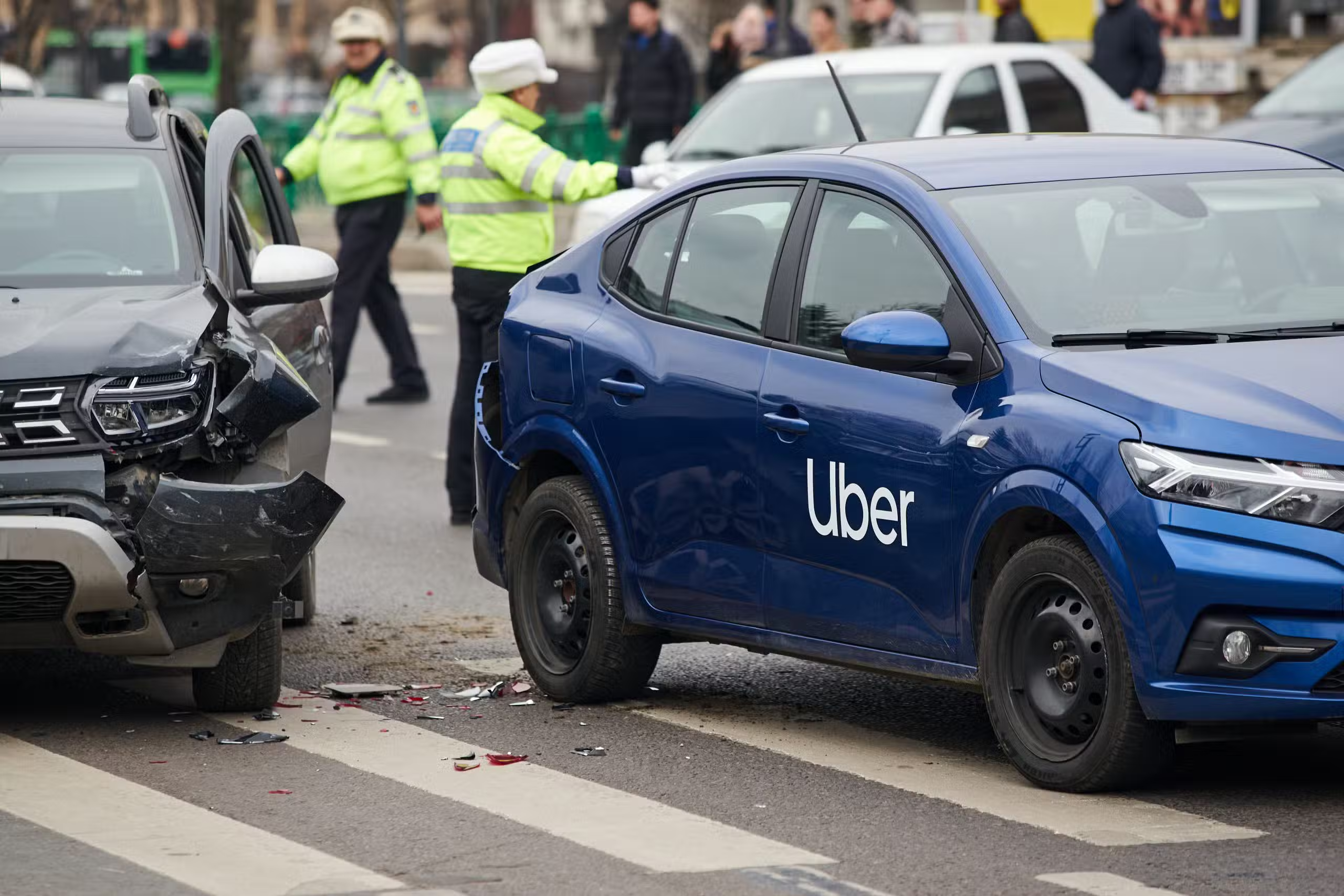

Uber's insurance coverage operates in 3 distinct phases tied to the driver's app status, each carrying different liability limits. When a driver is logged into the app and waiting for a ride request, a limited liability policy applies, not the full $1 million coverage most people assume is always active.
The 3 Periods of Uber Insurance Coverage
Uber divides driver coverage into 3 defined periods. Period 0 covers the driver exclusively under their personal auto policy when the app is off. Period 1 applies when the driver is logged in and available but has not accepted a fare. Period 2 begins when the driver accepts a ride request and is en route to pick up the passenger. Period 3 covers the time from passenger pickup through drop-off at the destination.

What Period 1 Coverage Actually Includes
During Period 1, Uber provides $50,000 per person in bodily injury coverage, $100,000 per accident in total bodily injury coverage, and $25,000 in property damage coverage. This coverage activates only if the driver's personal insurance denies the claim. Most personal auto policies exclude commercial use, so Period 1 is often the only available coverage after a personal insurer denial.

Why Period 1 Creates the Biggest Insurance Gap
Period 1 is the most legally dangerous phase for injured third parties. A driver circling a neighborhood waiting for a fare is technically operating a commercial vehicle without full commercial coverage. If that driver causes a serious accident, the $50,000 per-person cap may fall far short of covering hospitalization, surgery, or long-term rehabilitation costs. This gap is particularly significant in California, where serious injury medical costs regularly exceed $100,000.

How Personal Auto Insurance Interacts With Period 1
Most personal auto insurers deny claims when the rideshare app is active at the time of the crash. California law classifies rideshare companies as Transportation Network Companies and requires them to maintain liability insurance whenever a driver is logged into the platform. That requirement creates the Period 1 floor but does not expand the coverage cap. Insurers dispute driver app status aggressively, making contemporaneous documentation at the accident scene critical.
What to Do If You Were Hit During Period 1
If you were injured in an accident involving an Uber driver who had not yet accepted a fare, document the driver's app status at the time of the crash. Screenshot any visible app activity, gather witness contact information, and request the police report number before leaving the scene. Do not give a recorded statement to any insurer until you have spoken with an attorney. Uber's claim process begins through the app, but your legal rights require independent representation.
Disputing App Status With Uber
Uber maintains timestamped app activity logs for each driver. These records show when the app was opened, when the driver went online, and when a ride was accepted. Your attorney can subpoena these logs through litigation or obtain them through a formal preservation demand. App status disputes are common in Period 1 cases because Uber and the driver's personal carrier each have a financial incentive to argue the other is responsible.
When the Full $1 Million Policy Applies
Uber's $1 million liability policy activates only during Periods 2 and 3, after the driver has accepted a ride request. If your accident happened during Period 1, you face lower coverage caps and a higher probability of disputes between Uber's insurer and the driver's personal carrier. Understanding which period applied at the exact moment of impact determines the entire coverage landscape for your claim.
Insurance adjusters handling Period 1 claims work to minimize payouts. Accepting an early settlement without understanding the full scope of your injuries permanently limits your recovery. Legal representation from day one prevents this outcome. Knowing the 3-period structure before any insurer communication begins gives your attorney the factual framework to immediately challenge a misclassification of your accident as a Period 0 event, which is the most common tactic used to deny coverage in rideshare crash cases.
California's minimum insurance requirements do not account for rideshare commercial use, which is why the Period 1 gap exists as a structural problem rather than an oversight. Until California law mandates higher Period 1 floors, injured victims face below-market coverage at precisely the moment when commercial operation creates the greatest risk exposure.
Work With Avian Law Group
Working with a rideshare accident attorney who understands the 3-period structure allows you to determine which coverage applies, how to file correctly, and what your claim is actually worth.
For accidents involving other vehicle types, our car accident attorneys in California handle claims involving commercial and personal policy disputes across all vehicle categories.
If your injuries are significant, our personal injury lawyers assess medical costs, lost wages, and non-economic damages in rideshare cases where coverage limits are contested.

Michael Avanesian, the founder and driving force behind Avian Law Group, is a passionate and dedicated attorney with a strong background in personal injury law. As a partner at JT Legal Group, Michael led the growth of the personal injury practice from a single employee to a team of over ninety professionals, securing over $2 billion in settlements for clients in just three years.