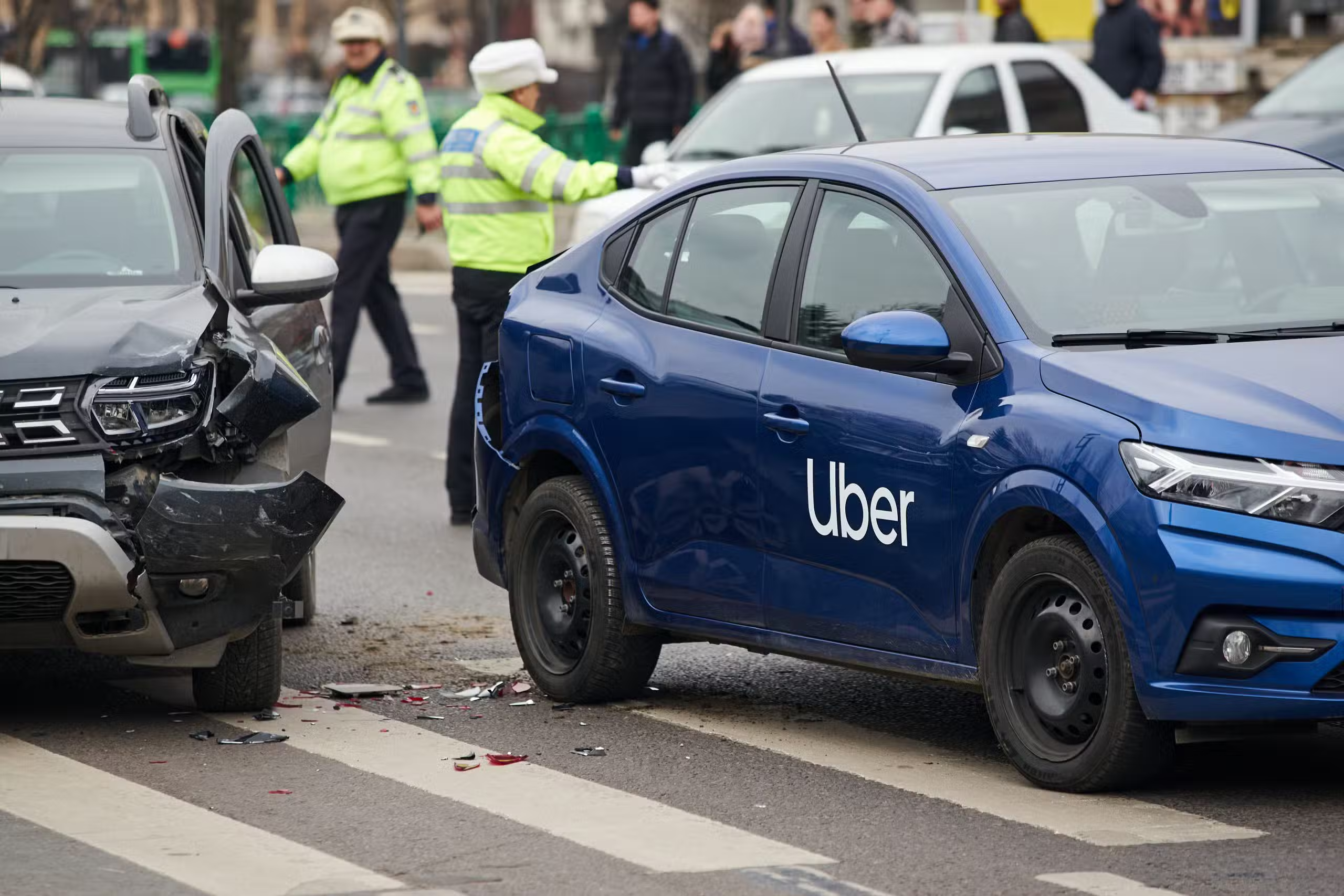


In most cases, you cannot sue Uber or Lyft directly for injuries caused by one of their drivers. Both companies classify their drivers as independent contractors rather than employees, and California courts have generally upheld this classification for purposes of accident liability. That distinction limits the legal theories available to injured victims, but it does not eliminate all paths to holding the company accountable.
Why the Independent Contractor Classification Matters
Under California law, a company is typically liable for the negligent actions of its employees under respondeat superior. If a UPS driver causes an accident while making deliveries, UPS can be held directly responsible. Uber and Lyft avoid this by maintaining that their drivers are independent contractors who control their own schedules, choose their own vehicles, and decide when and where to drive.
California's Assembly Bill 5 (AB5) attempted to reclassify gig workers as employees using the ABC test. However, Proposition 22, passed by voters in November 2020, created a specific exemption for app-based transportation and delivery companies, allowing Uber and Lyft to continue treating drivers as independent contractors.
When You Can Sue the Company Directly
Despite the independent contractor classification, there are narrow circumstances where a direct lawsuit against Uber or Lyft may succeed. These theories target the company's own conduct rather than holding it vicariously liable for the driver's actions.
Negligent Hiring and Screening
If the company failed to conduct an adequate background check on a driver with a known history of reckless driving, DUI convictions, or violent criminal behavior, a negligent hiring claim could apply. Gaps in the screening process, such as failing to detect out-of-state violations, can form the basis of this claim.
Product Liability
If the Uber or Lyft app contributed to the crash through distracting notifications, dangerous routing, or a failure to warn about known hazards, the app itself could be considered a defective product. These claims require specific evidence tying the app's behavior to the accident.
Agency Theory
Some courts have considered whether the level of control these companies exercise over drivers creates an agency relationship despite the independent contractor label. Relevant factors include:
- Mandatory ride acceptance rates and deactivation policies
- Company-controlled pricing with no driver input
- Required route compliance through the app
- Performance ratings that function as employment evaluations
The Practical Path to Compensation
For most rideshare accident victims, the practical route runs through the insurance policies Uber and Lyft maintain under California law. Both companies carry $1 million in liability coverage for accidents during active rides. The claim is filed against the driver, and the rideshare company's insurance responds.
Understanding the insurance coverage gaps in rideshare accidents is essential because coverage depends on the driver's app status at the time of the collision. An experienced rideshare accident attorney can evaluate whether a direct claim against the company is viable. If you have been seriously injured, a personal injury lawyer can assess all available options before critical deadlines pass.

Michael Avanesian, the founder and driving force behind Avian Law Group, is a passionate and dedicated attorney with a strong background in personal injury law. As a partner at JT Legal Group, Michael led the growth of the personal injury practice from a single employee to a team of over ninety professionals, securing over $2 billion in settlements for clients in just three years.