

A denied wildfire insurance claim is not the end of your case. California law gives policyholders the right to appeal denials, file formal complaints with the California Department of Insurance, and sue insurers who deny valid claims in bad faith. The timeline for acting on each of these options is limited, making prompt action essential.
Read the Denial Letter Before Responding
Your insurer must provide a written explanation for every denial. Read the denial letter in full and identify the specific exclusion or policy provision cited. Common denial reasons include a wildfire-specific deductible the policyholder was unaware of, a dispute that damage is pre-existing or unrelated to the fire event, a claim that the property was not within the official fire perimeter, or an argument that the claim was filed after the applicable deadline. Each denial reason has a specific legal counter.

Request Your Complete Claims File
Under California law, you have the right to request your entire claims file, including adjuster notes, inspection reports, photographs taken during the site visit, and all internal insurer communications. This file often reveals inconsistencies in how the insurer evaluated your loss and provides the factual foundation for an effective appeal. Insurers are required to respond to a complete file request within 15 business days under California Insurance Code Section 2071.
How to File an Internal Appeal
Submit a written appeal to your insurer within the timeframe specified in your policy, typically 30 to 60 days from the denial date. Include new supporting documentation: independent contractor repair estimates, professional photographs of the damage, replacement cost receipts, industrial hygienist reports for smoke and soot contamination, and a written legal argument explaining why the denial does not comply with your policy terms. Request that a different adjuster be assigned to review the appeal file.
Filing a Complaint With the California Department of Insurance
If the internal appeal is denied, file a formal complaint at insurance.ca.gov or by calling 1-800-927-4357. The California Department of Insurance has authority to investigate unfair claims practices, require insurers to reverse incorrect denials, and impose financial penalties for statutory violations. Filing a CDI complaint is free, creates an official record of the dispute, and often prompts insurers to reconsider a denial to avoid regulatory scrutiny.
What Constitutes Bad Faith by a California Insurer
California Insurance Code Section 790.03 prohibits unfair claims settlement practices. An insurer acts in bad faith when it unreasonably delays payment without explanation, denies a claim without conducting an adequate investigation, misrepresents policy terms to reduce a payout, or offers a settlement far below the documented and verifiable value of the loss. A successful bad faith lawsuit can produce damages that exceed your original policy limits, including payment of your attorney fees and compensation for emotional distress.
Suing Your Insurer for a Wrongful Denial
If administrative remedies do not resolve the dispute, you can file a lawsuit against your insurer for breach of contract and bad faith insurance practices. California's statute of limitations for insurance bad faith is generally 2 years from the date of the wrongful conduct. Wildfire victims in Los Angeles County facing denied or delayed claims following the 2025 Eaton and Palisades fires are among those currently pursuing active litigation against major carriers and the FAIR Plan. California courts take bad faith insurance conduct in the aftermath of declared disasters particularly seriously, and the volume of pending litigation following the 2025 fires is generating new precedent that strengthens the legal position of policyholders across California whose claims were improperly denied or delayed by carriers who prioritized cost management over their statutory obligations.
Documenting Your Losses Before and After the Denial
Keep records of every communication with your insurer after the denial, including the date, the representative's name, and the substance of every conversation. Document all out-of-pocket expenses incurred due to the denial, including temporary housing costs, restoration contractor payments, and personal property replacements. This documentation forms the financial backbone of your breach of contract and bad faith claims.
Document your out-of-pocket expenses from the moment of denial forward. Every dollar you spend on temporary relocation, emergency repairs, or alternative accommodations because your insurer refused to act becomes evidence of the damages caused by the bad faith denial itself. California courts consider these consequential losses separately from your original policy benefits when awarding damages in bad faith insurance cases.
Work With Avian Law Group
Our ash and soot damage attorneys represent wildfire victims whose claims have been denied, delayed, or underpaid, handling every stage from appeal through litigation.
If your denial involves smoke, soot, or secondary fire damage specifically, our fire damage attorneys develop the technical and legal documentation needed to support these claims.
You pay nothing unless we win your case. Learn more about how our zero fee guarantee works before taking on your insurer alone.
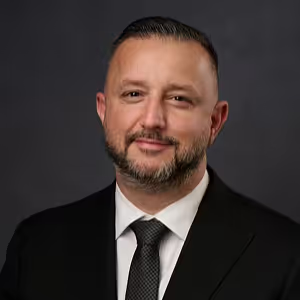
Michael Avanesian, the founder and driving force behind Avian Law Group, is a passionate and dedicated attorney with a strong background in personal injury law. As a partner at JT Legal Group, Michael led the growth of the personal injury practice from a single employee to a team of over ninety professionals, securing over $2 billion in settlements for clients in just three years.