
California imposes one of the strictest dog bite liability standards in the country. Under California Civil Code Section 3342, a dog owner is strictly liable for injuries caused by their dog biting someone in a public place or lawfully on private property, regardless of whether the owner knew the dog had ever bitten anyone before or had any reason to believe the dog was dangerous. This strict liability standard removes one of the most common defenses dog owners raise in other states and makes California one of the most favorable jurisdictions for dog bite victims pursuing compensation for their injuries.
What Strict Liability Means in Practice
In states that use the one bite rule, a dog owner is only liable if they knew or should have known their dog was dangerous, typically because the dog had bitten someone before or had shown aggressive tendencies such as growling, lunging, or snapping at people. California does not use that standard. Under California's strict liability statute:
- The first bite is fully compensable with no requirement to prove the owner had prior knowledge of dangerous propensities
- The owner cannot escape liability by arguing the dog had never shown aggression before the attack
- The owner cannot argue the dog was well-trained, had completed obedience classes, or had a gentle temperament
- Provocation is the only meaningful defense, and the standard for what constitutes provocation sufficient to defeat a claim is very high and usually requires the victim to have intentionally hurt or frightened the dog immediately before the bite
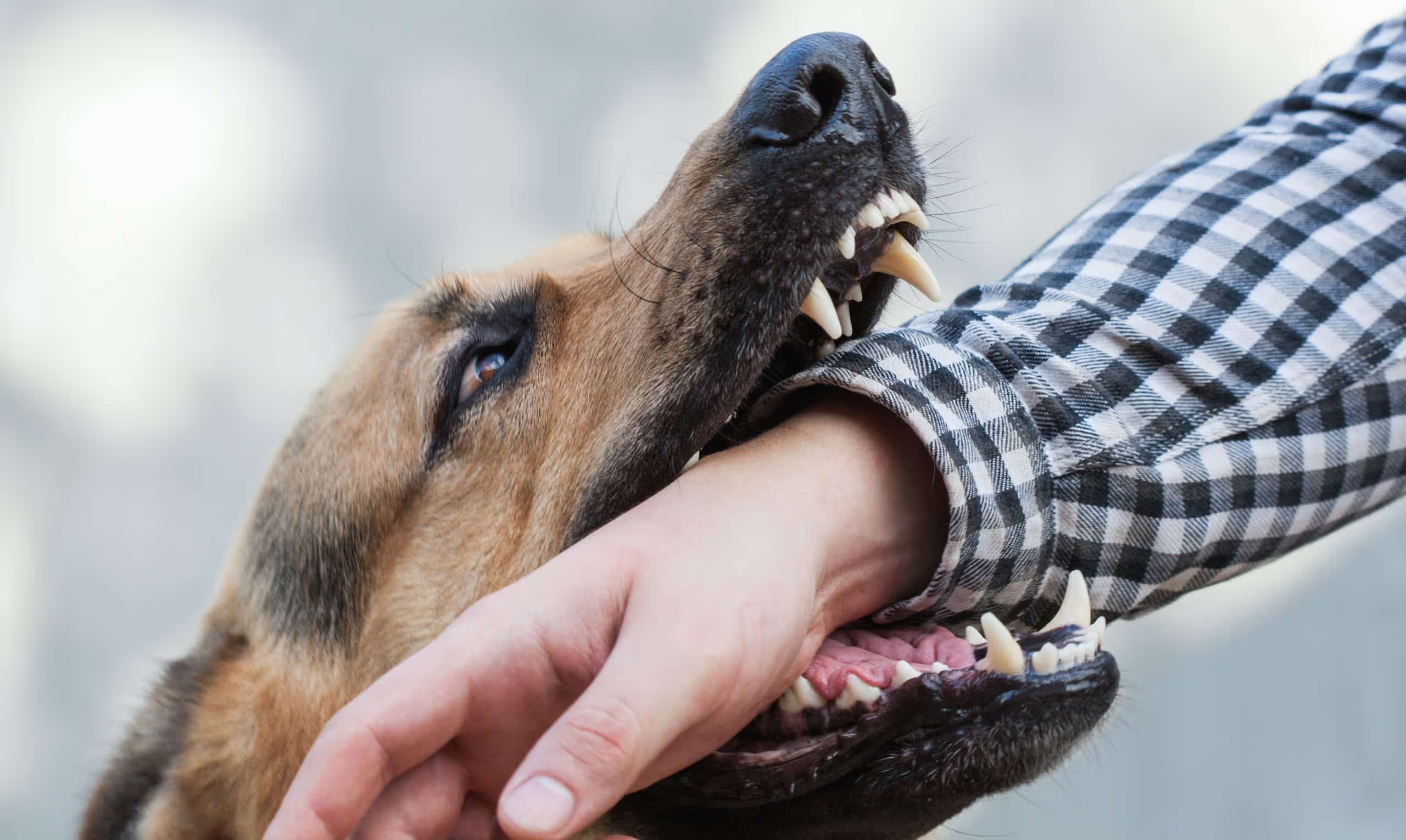
Strict liability applies specifically to bite injuries where the dog's teeth break the skin. Injuries caused by a dog jumping on someone and knocking them down, chasing someone and causing them to fall while fleeing, or scratching someone are governed by general negligence standards rather than the strict liability statute. However, both theories can often be pursued in parallel when the facts support both a bite claim under the statute and a negligence claim based on the owner's failure to control the dog or failure to secure the dog properly.
What Evidence Matters in a Dog Bite Case
Documenting a dog bite claim properly begins at the scene and continues through your full medical recovery. Photograph all injuries immediately after the bite before any treatment is provided. Continue photographing daily as bruising develops, swelling evolves, wounds heal, and any scarring becomes apparent. Get the dog owner's full name, address, phone number, and homeowner's or renter's insurance information. Confirm whether the dog is current on its rabies vaccination and get documentation if possible. Our walkthrough of how to file a dog bite claim covers every step of the documentation and reporting process from the immediate aftermath through filing the formal claim with the insurance company.
Animal control reports create an official record that the bite occurred and document critical information about the dog, the owner, and the circumstances of the attack. They should be filed even when the injury appears minor at first, because dog bite infections can worsen significantly in the days following the attack, turning what seemed like a superficial wound into a serious medical situation requiring hospitalization. Having an official report filed at the time strengthens your claim if you need to pursue compensation later.
Medical records documenting the wound, treatment received including wound cleaning and closure, antibiotics prescribed, tetanus shots, rabies prophylaxis if the dog's vaccination status could not be confirmed, any follow-up visits for infection or complications, nerve damage evaluation, and any reconstructive surgery for scarring are essential to proving the extent of your injuries and connecting them to the dog bite. Photographs alone are not enough. You need clinical documentation from medical professionals who examined and treated the wounds.
What Victims Can Recover
Damages in a California dog bite case cover several categories:
- Medical expenses including emergency care, wound cleaning and closure procedures, antibiotics, rabies prophylaxis if needed, treatment for infections or complications, plastic surgery or reconstructive procedures for scarring particularly on visible areas like the face and hands, and any future treatment for nerve damage or ongoing complications
- Lost wages during recovery from the date of the bite through your return to work, and reduced earning capacity if the injury causes permanent impairment or disfigurement that affects your ability to perform your job
- Pain and suffering from the physical pain of the bite, the trauma of the attack itself, and the ongoing discomfort during healing
- Emotional distress and psychological trauma, particularly for children who may develop lasting fear of dogs or post-traumatic stress from a severe attack
- Scarring and disfigurement damages, especially when bites occur on the face, hands, arms, or other visible areas that cannot be fully concealed by clothing
Post-traumatic stress, anxiety, and fear related to dogs following a serious attack are increasingly recognized as compensable damages in dog bite cases. The psychological impact of a severe dog attack, particularly when the victim was a child or when the attack involved prolonged mauling rather than a single bite, can be as disabling as the physical injury and should be documented through mental health treatment records and expert testimony when necessary to establish the full value.
The Litigation Process
Our article on what happens in a dog bite lawsuit explains the timeline from claim filing through settlement or trial. Most dog bite claims are resolved through settlement negotiations with the dog owner's homeowner's insurance carrier, which typically covers dog bite liability up to the policy limits. However, when settlement negotiations fail because the insurer disputes liability or coverage, or when the insurance company denies the claim entirely, litigation may be necessary to recover the full compensation you are entitled to under California's strict liability law.
If you were bitten by a dog in California, a dog bite attorney can evaluate your claim within the framework of California's strict liability statute, identify the owner's insurance coverage and policy limits, gather the medical and photographic evidence needed to prove the full extent of your injuries, negotiate with the insurance company on your behalf using the leverage that strict liability provides, and pursue litigation if the insurer refuses to pay fair compensation for the physical and psychological harm you suffered in an attack that California law makes the owner automatically responsible for regardless of the dog's history.

Michael Avanesian, the founder and driving force behind Avian Law Group, is a passionate and dedicated attorney with a strong background in personal injury law. As a partner at JT Legal Group, Michael led the growth of the personal injury practice from a single employee to a team of over ninety professionals, securing over $2 billion in settlements for clients in just three years.