
Executive Summary
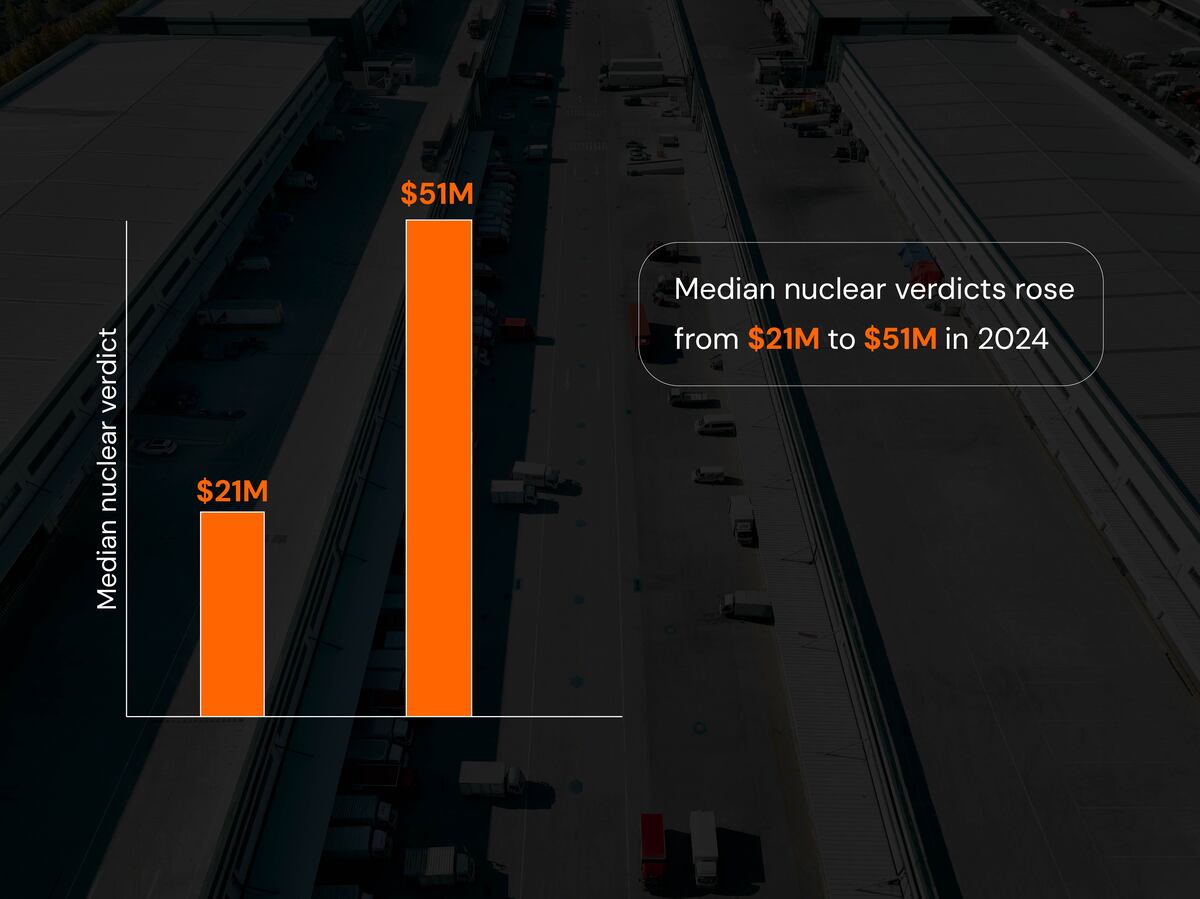
Commercial vehicle crashes in the United States have entered a new era defined by e-commerce volume, fragmented contractor networks, and record-setting verdicts. Federal data shows large truck and bus crashes killed nearly 5,500 people in the most recent reporting year, with California recording 392 of those deaths, second only to Texas [6]. The legal stakes have escalated in parallel: the median nuclear verdict against U.S. corporations climbed from $21 million in 2020 to $51 million in 2024 [9], and trucking and automotive sectors faced $4.1 billion across 15 substantial verdicts in 2024 alone [8]. This report analyzes how e-commerce growth, last-mile delivery infrastructure, and the contractor-driven Delivery Service Partner model are reshaping crash patterns on the freight corridors crossing California, Arizona, and Nevada, and examines the legal recourse available to victims of commercial vehicle collisions.
Section 1: The Current State of Commercial Vehicle Crashes
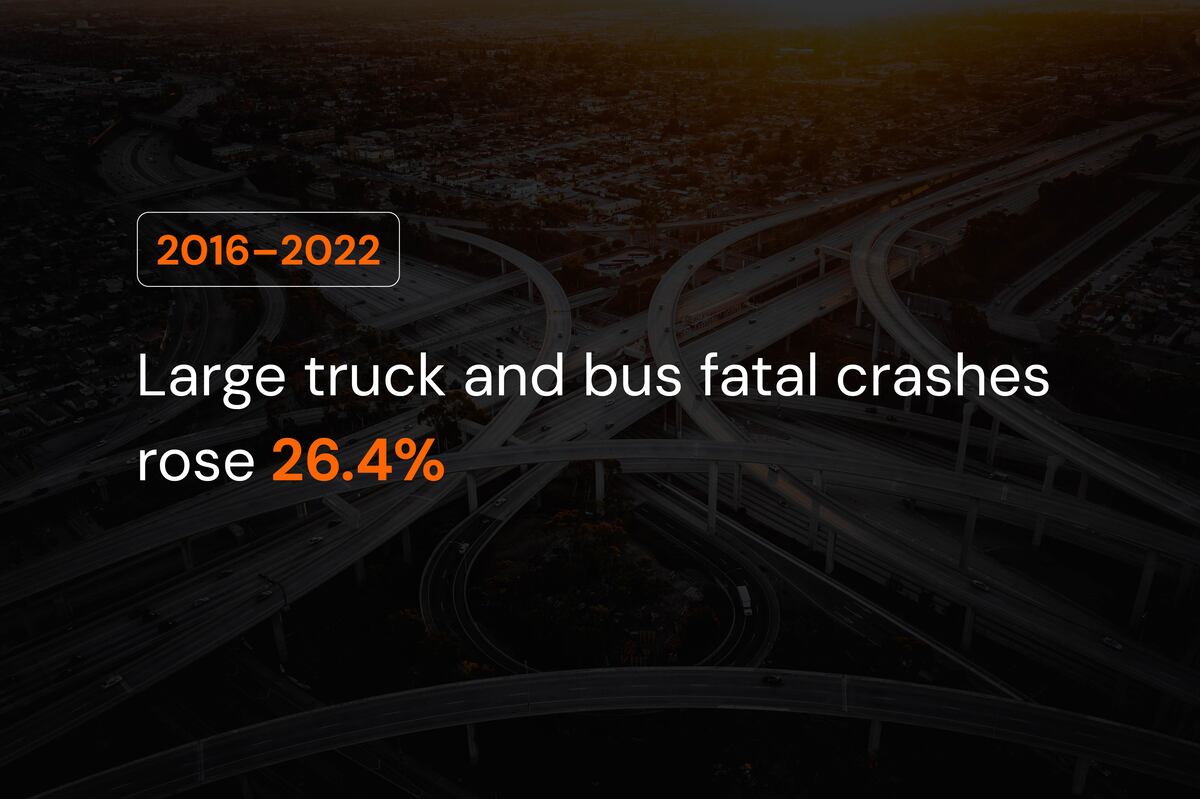
Large truck fatalities have risen for more than a decade, even as overall traffic deaths have begun to recede. The Federal Motor Carrier Safety Administration reports fatal crashes involving large trucks and buses increased 26.4 percent between 2016 and 2022 [1]. The National Highway Traffic Safety Administration estimates 17,140 people died in motor vehicle crashes during the first half of 2025, an 8.2 percent decline from the same period in 2024 [5]. Despite that broader improvement, large truck fatalities remain near 5,500 annually [5].
Where commercial crashes concentrate
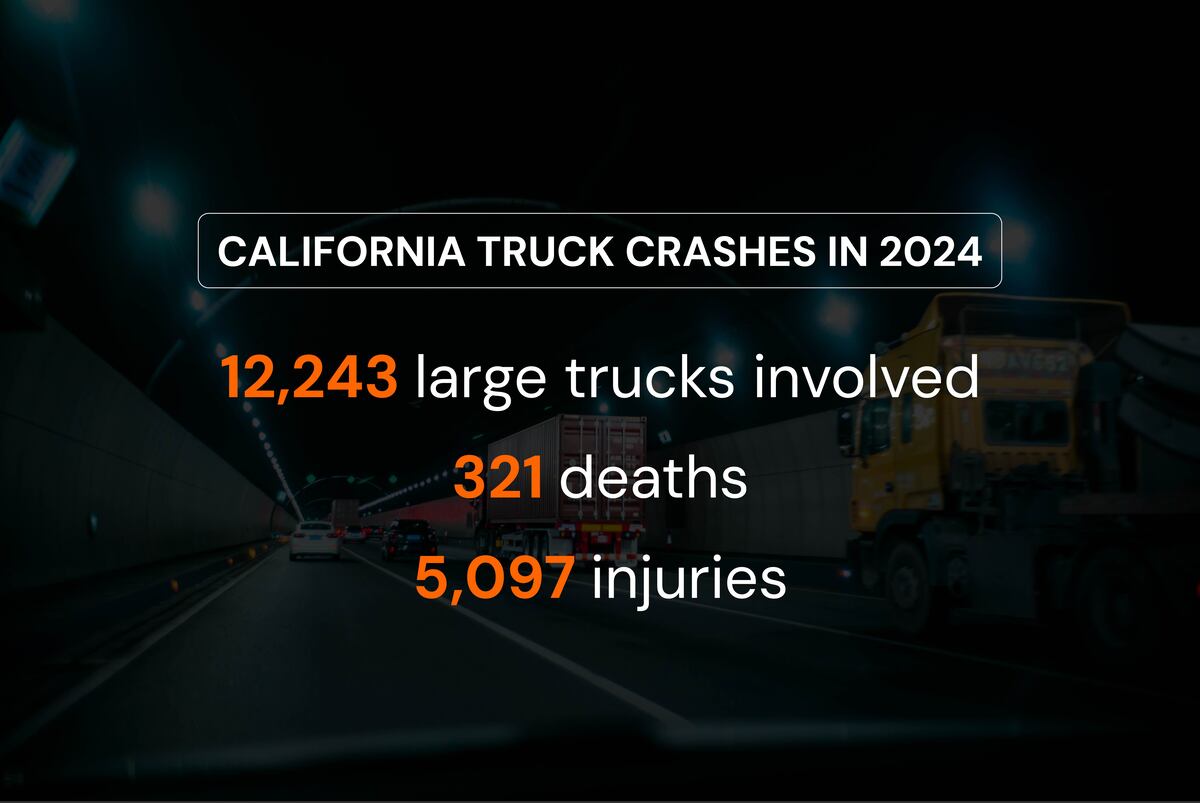
California ranked second nationally for large truck fatalities in 2023 with 392 deaths [6]. FMCSA data for 2024 records 12,243 large trucks involved in California crashes, resulting in 321 deaths and 5,097 nonfatal injuries [7]. In Arizona, four counties along the I-40 corridor accounted for roughly a quarter of all large truck crashes in the state in 2024, with Coconino County alone recording 215 truck crashes and 16 fatalities [17].
Section 2: The E-Commerce Engine and Last-Mile Delivery Surge
E-commerce has fundamentally restructured the commercial vehicle fleet on American roads. The U.S. Postal Service shipped 6.9 billion packages in 2024, while Amazon Logistics processed 6.3 billion parcels, a 688 percent increase from 2018 [12]. The U.S. same-day delivery market alone was valued at $9.25 billion in 2024 [12].
The crash impact of last-mile facilities
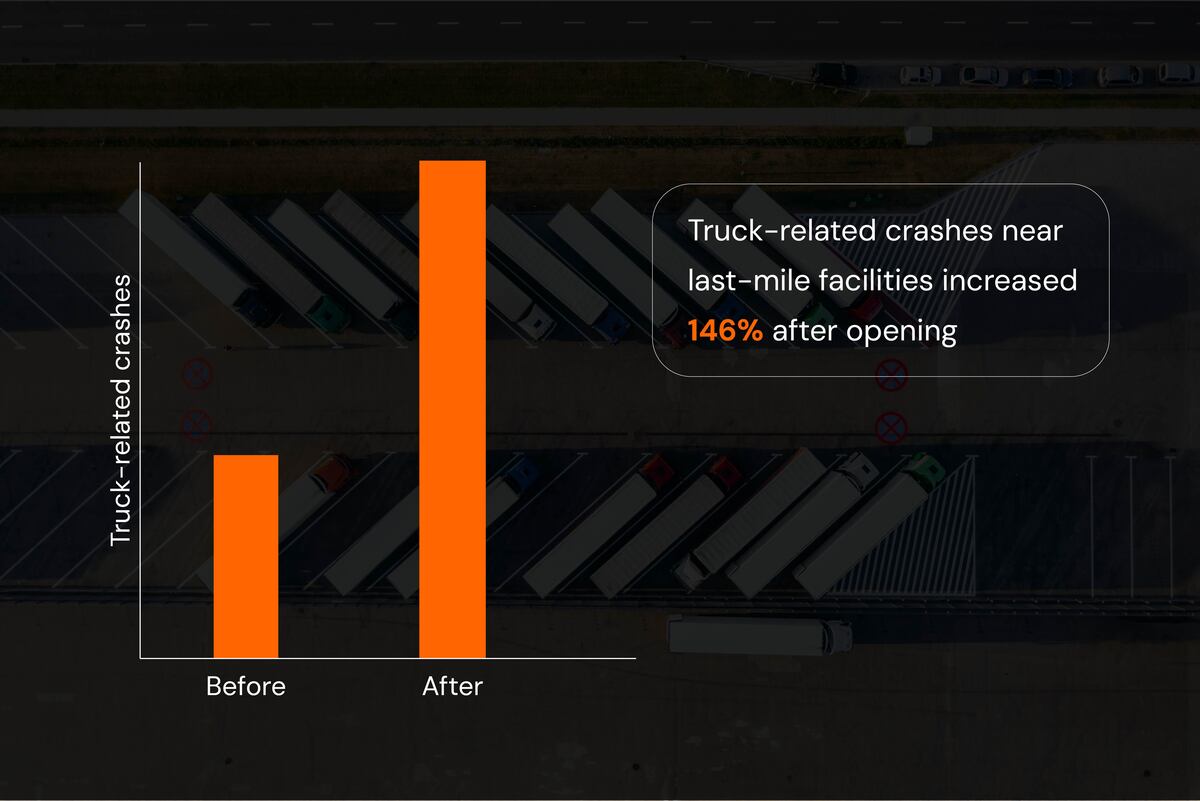
The November 2025 New York City Comptroller report, Fast Shipping. Slow Justice., found that truck-related crashes near last-mile delivery facilities increased 146 percent after those warehouses opened, and truck-injury crashes rose 137 percent [4]. Within a half-mile radius of those same facilities, injury-causing crashes rose by an average of 16 percent [4]. The underlying logistics model has been deployed aggressively in Southern California and the Phoenix metropolitan area.
The Western freight corridor
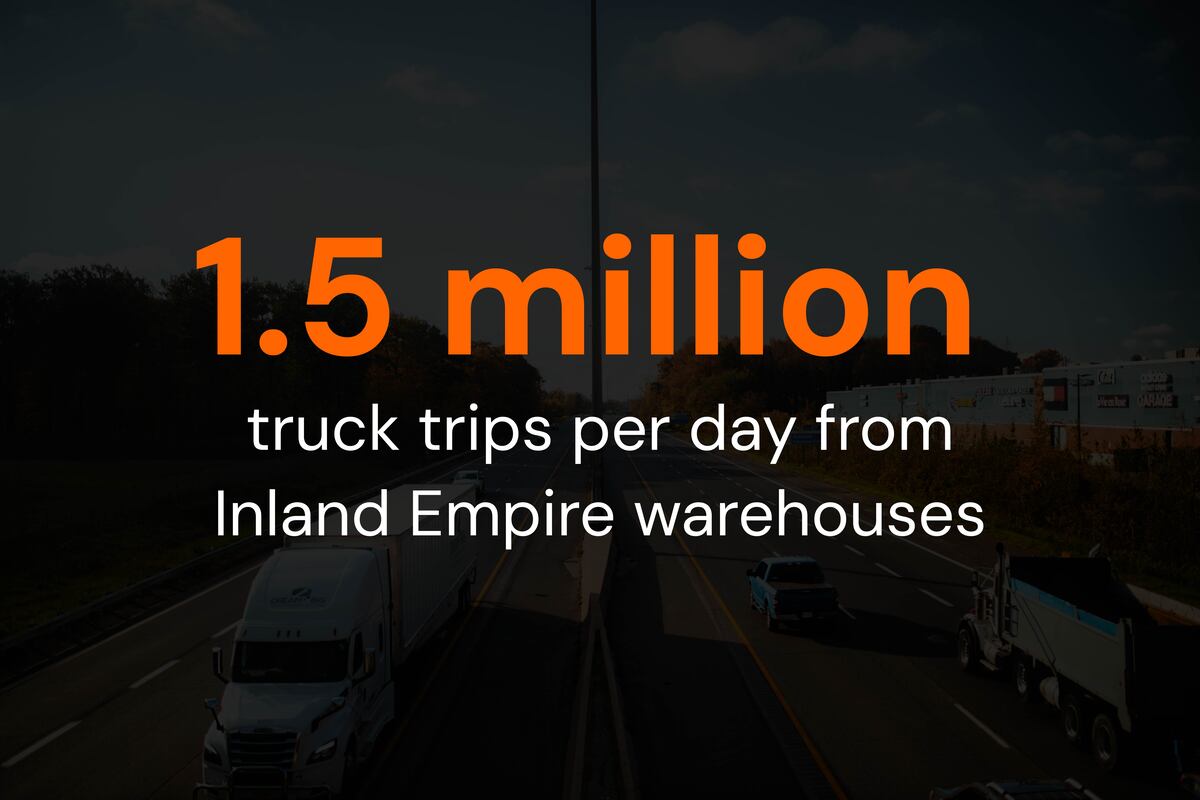
Southern California's Inland Empire contains more than one billion square feet of warehouse space, with another 170 million square feet planned [20]. Roughly 1.5 million truck trips originate from or arrive at Inland Empire warehouses each day [20]. Interstate 5, Interstate 10, Interstate 15, and Interstate 40 funnel this traffic across Arizona and into Nevada.
Section 3: The Contractor Model and Liability Gaps
The expansion of the e-commerce delivery network has coincided with the rise of fragmented, contractor-driven employment models. Amazon's Delivery Service Partner (DSP) program contracts independent companies to operate vans bearing Amazon branding, while Amazon Relay uses third-party motor carriers to move freight between facilities.
Safety performance under contractor models
A CBS News investigation analyzing six years of FMCSA data found that the unsafe driving violation rates of carriers shipping for Amazon were at least 89 percent higher than non-Amazon carriers in every month studied [3]. Federal records identified at least 57 deaths in more than 48 crashes involving federally regulated carriers hauling for Amazon during a two-year period [3]. The DSP program itself recorded an injury rate of 9.2 per 100 employees in 2023 and 2024, exceeding the broader last-mile and courier industries [4].
Fatigue and hours-of-service violations
The FMCSA Large Truck Crash Causation Study identified driver fatigue as a contributing factor in approximately 13 percent of large truck crashes [13]. Federal research indicates that 18 hours of continuous wakefulness produces driving impairment comparable to a 0.08 blood alcohol concentration, the legal threshold for impaired driving [16]. Federal hours-of-service rules under 49 CFR Part 395 limit property-carrying drivers to 11 hours of driving within a 14-hour on-duty window, following 10 consecutive hours off duty [14].
Section 4: The Economic and Litigation Footprint
The U.S. freight trucking sector remains one of the country's largest economic segments. The general freight trucking truckload industry reached $267.1 billion in 2025, and local freight trucking reached $99.4 billion the same year [10][11].
Nuclear and thermonuclear verdicts
The American Transportation Research Institute documented that the median nuclear verdict against U.S. corporations rose from $21 million in 2020 to $51 million in 2024 [9]. Marathon Strategies reported 49 thermonuclear verdicts (those exceeding $100 million) in 2024, up from 27 in 2023, with the trucking and automotive sectors accounting for $4.1 billion across 15 substantial verdicts [8]. Nevada and California led all states in total award value, at $8.4 billion and $6.9 billion respectively [8]. A 2024 product liability case against Wabash National produced a $462 million verdict in a trailer-related fatal crash [19].
Section 5: Legal Recourse for Commercial Vehicle Crash Victims
Multiple potential defendants
A commercial truck collision typically involves more than one liable party. Federal law (49 CFR § 387.9) requires interstate commercial carriers to maintain minimum liability coverage of $750,000 for general freight, with most large carriers maintaining umbrella policies in the multi-million-dollar range. Courts in recent commercial vehicle cases have increasingly pierced the contractor liability shield to hold lead corporations directly responsible, particularly where performance-quota evidence is preserved [3].
Avian Law Group's commercial vehicle practice
Avian Law Group represents victims of commercial vehicle and delivery truck crashes across California, Arizona, and Nevada. The firm's litigation team handles cases on the I-5, I-10, I-15, and I-40 freight corridors connecting Los Angeles, the Inland Empire, Phoenix, and Las Vegas. With offices in Los Angeles, Glendale, Burbank, Oceanside, Phoenix, Glendale (Arizona), and Las Vegas, the firm pursues claims involving driver fatigue violations, contractor liability gaps, electronic logging device data, and engine control module evidence preservation [18].
Section 6: Looking Ahead Through 2028
Regulatory developments
In November 2025, the FMCSA issued a Federal Register notice announcing a new study, Crash Risks by Commercial Motor Vehicle (CMV) Driver Schedules, to analyze how driver work schedules affect fatigue and crash risk [15]. The proposed study would gather data from hours-of-service logs, accident records, and inspection violations, with public comment open through January 2026 [15].
Continued market growth
The U.S. parcel shipping market is projected to grow from $203.2 billion in revenue in 2024 to $286 billion by 2028 [12]. Amazon Logistics is projected to overtake USPS in U.S. package volume by 2028 [12]. These growth projections suggest sustained and likely intensified commercial vehicle traffic on Western freight corridors through the remainder of the decade.
Conclusion
E-commerce volume growth, contractor-driven delivery networks, and a litigation environment producing record-setting verdicts have fundamentally altered the commercial vehicle crash landscape. For victims of commercial vehicle and delivery truck collisions on the West's busiest freight corridors, the legal recourse available depends on rapid evidence preservation, contractor-record analysis, and counsel familiar with federal motor carrier regulations and state-specific commercial vehicle law.
Works Cited
- Federal Motor Carrier Safety Administration. "Commercial Motor Vehicle Crash Data Overview." December 2024. https://www.fmcsa.dot.gov/sites/fmcsa.dot.gov/files/2024-12/Commercial Motor Vehicle Crash Data Overview 508.pdf. Cited for the 26.4 percent increase in fatal crashes involving large trucks and buses, 2016 to 2022.
- Federal Motor Carrier Safety Administration. "Pocket Guide to Large Truck and Bus Statistics." 2024. https://www.fmcsa.dot.gov/safety/data-and-statistics/commercial-motor-vehicle-facts. Cited as the primary federal statistical reference for the industry.
- Andone, Dakin and CBS News Investigative Team. "Amazon trucking contractors have higher rates of safety violations, CBS News investigation finds." CBS News. December 2024. https://www.cbsnews.com/news/amazon-trucking-contractors-have-higher-rates-of-safety-violations/. Cited for at least 57 deaths in over 48 crashes involving Amazon-shipping carriers and the 89 percent higher unsafe driving violation rate.
- Lander, Brad. "Fast Shipping. Slow Justice." Office of the New York City Comptroller. November 2025. https://comptroller.nyc.gov/newsroom/growth-of-e-commerce-exacerbated-traffic-crashes-pollution-and-workplace-injuries-comptroller-lander-reports/. Cited for the 146 percent increase in truck-related crashes near last-mile facilities, the 137 percent increase in truck-injury crashes, and the DSP 9.2 injuries per 100 employees figure.
- National Highway Traffic Safety Administration. "Early Estimates of Motor Vehicle Traffic Fatalities, First Half 2025." 2025. Reported via Commercial Carrier Journal. https://www.ccjdigital.com/regulations/article/15768104/report-reveals-deadliest-states-for-truck-crashes. Cited for 17,140 fatalities and the 8.2 percent decline. Note: secondary citation; underlying source is NHTSA.
- National Safety Council. "Injury Facts: Large Truck Crashes by State." 2023 reporting year. Cited for California's 392 large-truck fatalities, ranking second nationally.
- Federal Motor Carrier Safety Administration. "Motor Carrier Management Information System (MCMIS): California State Data." 2024. Cited for 12,243 large trucks involved in California crashes, 321 deaths, and 5,097 nonfatal injuries.
- Marathon Strategies. "Corporate Verdicts Go Thermonuclear: 2024 Annual Report." 2025. Reported via Commercial Carrier Journal. https://www.ccjdigital.com/business/article/15770449/trucking-industry-faces-41b-in-megaverdicts. Cited for the 49 thermonuclear verdicts in 2024, the trucking and automotive sector totals, and the state-by-state award rankings.
- American Transportation Research Institute. "Understanding the Impact of Nuclear Verdicts on the Trucking Industry." Reported via Commercial Carrier Journal. https://www.ccjdigital.com/business/article/15824508/trucking-leaders-sound-the-alarm-on-nuclear-verdicts-surging-premiums. Cited for the rise in median nuclear verdicts from $21 million in 2020 to $51 million in 2024.
- IBISWorld. "General Freight Trucking (Truckload) in the US Industry Analysis." 2025. https://www.ibisworld.com/united-states/industry/general-freight-trucking-truckload/6146/. Cited for the $267.1 billion market size.
- IBISWorld. "Local Freight Trucking in the US Market Size." 2025. https://www.ibisworld.com/united-states/market-size/local-freight-trucking/1149/. Cited for the $99.4 billion local freight trucking market.
- Sellers Commerce, citing Statista, U.S. Postal Service, and Amazon Logistics data. "Package Delivery Statistics 2026." https://www.sellerscommerce.com/blog/package-delivery-statistics/. Cited for U.S. parcel shipping revenue figures, Amazon Logistics 688 percent growth, and USPS 2024 parcel volume. Note: secondary aggregator; underlying figures originate from Statista and USPS public filings.
- Federal Motor Carrier Safety Administration. "Large Truck Crash Causation Study (LTCCS) Analysis Series." https://www.fmcsa.dot.gov/safety/research-and-analysis/large-truck-crash-causation-study-ltccs-analysis-series-using-ltccs. Cited for the approximately 13 percent fatigue contribution to large truck crashes.
- U.S. Code of Federal Regulations. "49 CFR Part 395: Hours of Service of Drivers." Cited for federal hours-of-service rules applicable to property-carrying commercial drivers.
- Federal Motor Carrier Safety Administration. "Crash Risks by Commercial Motor Vehicle (CMV) Driver Schedules: Information Collection Request." Federal Register Notice, November 17, 2025. Cited for the November 2025 driver-schedule study announcement and January 2026 public comment deadline.
- National Highway Traffic Safety Administration and FMCSA research. "Fatigue, Sleep, and the Driver." Cited for the equivalency between 18 hours of continuous wakefulness and a 0.08 BAC level of impairment.
- Federal Motor Carrier Safety Administration. "Arizona County Truck Crash Data." 2024. Reported via Burg Simpson, citing FMCSA MCMIS data. https://www.burgsimpson.com/arizona-blog/i40-dangerous-truck-accidents/. Cited for Coconino County's 215 truck crashes and 16 fatalities and the four-county I-40 cluster. Note: secondary citation; underlying source is FMCSA MCMIS.
- Avian Law Group. https://www.avianlawgroup.com. Host site. Cited for the firm's commercial vehicle and delivery truck practice area and office locations.
- Roberts, Jack. "Lawfare: Nuclear Verdicts and the War on Trucking." Heavy Duty Trucking. November 2024. https://www.truckinginfo.com/articles/lawfare-nuclear-verdicts-and-the-war-on-trucking-part-1. Cited for the $462 million Wabash National product liability verdict.
- California Local, citing Redford Conservancy data and the California State Assembly Committee on Jobs. "Logistics in California: the Most Important Part of the State Economy You've Never Heard Of." 2023. https://californialocal.com/localnews/statewide/ca/article/show/57195-california-logistics-industry-trucking-warehouses-inland-empire/. Cited for the one billion square feet of Inland Empire warehouse space and 1.5 million daily truck trips. Note: secondary citation; underlying sources are Redford Conservancy and the California State Assembly Committee on Jobs, Economic Development and the Economy.

Michael Avanesian, the founder and driving force behind Avian Law Group, is a passionate and dedicated attorney with a strong background in personal injury law. As a partner at JT Legal Group, Michael led the growth of the personal injury practice from a single employee to a team of over ninety professionals, securing over $2 billion in settlements for clients in just three years.