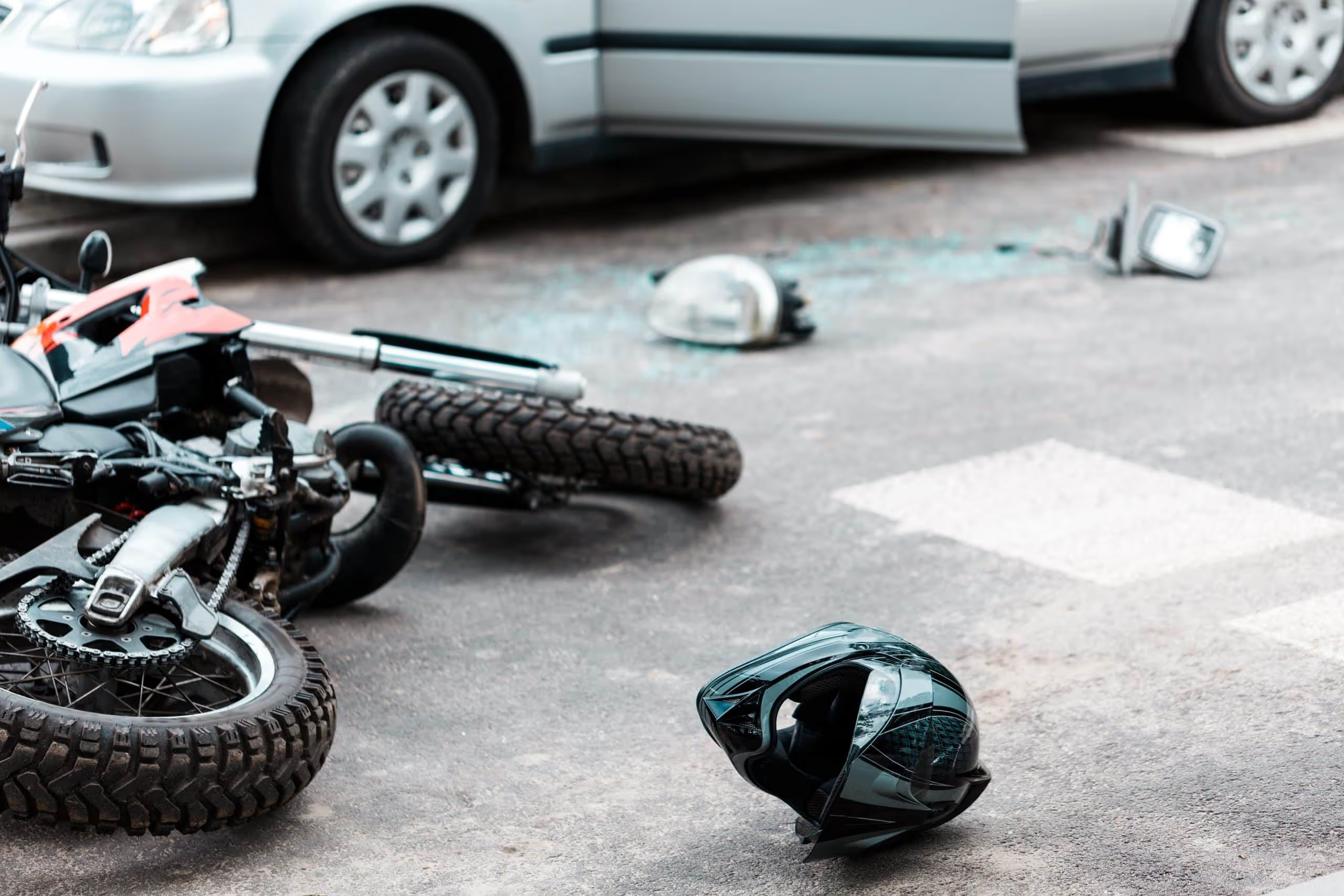

Motorcyclists injured in California accidents face a legal challenge that car accident victims typically do not encounter: pervasive bias against riders that operates at every level of the claims process. Insurance adjusters, defense attorneys, and sometimes even jurors hold preconceived beliefs about motorcyclists as inherently reckless or at fault by default. Understanding how that bias operates in practice and how an experienced attorney counters it with evidence and legal strategy is essential to recovering what you are owed after a motorcycle accident rather than accepting a settlement that reflects prejudice rather than the actual facts of the collision.
Where the Bias Comes From and How It Manifests
The statistical reality that motorcycle fatalities in California occur at dramatically higher rates per mile traveled than car fatalities is frequently misread by insurers and the public as evidence that motorcyclists are more dangerous drivers. The data actually reflects the physical vulnerability of riders who have no protective structure around them, not higher rates of negligent behavior. But insurance adjusters regularly use this statistical framing to minimize claims and shift fault onto the rider regardless of what the evidence actually shows about the specific collision.
Bias shows up in specific, predictable ways during the claims process:
- Questioning whether the rider was wearing appropriate safety gear and using the absence of specific protective equipment as evidence of comparative fault even when that gear is not legally required under California law.
- Implying that riding a motorcycle itself constitutes an assumption of risk that should reduce the driver's liability, which is not a recognized legal defense in California.
- Seizing on any aspect of lane position, speed, or maneuvering as evidence of recklessness even when the rider's actions were legal and reasonable under the circumstances.
- Attempting to introduce the rider's past traffic violations or the fact that they ride a high-performance motorcycle as character evidence suggesting they were probably at fault, which is generally inadmissible under evidence rules but still gets raised in settlement negotiations.
None of these arguments are legally sound under California comparative fault law, but they are deployed consistently by insurance defense teams because they know that many people, including potential jurors if the case goes to trial, harbor unconscious bias against motorcyclists. Countering this bias requires not just strong evidence but a deliberate litigation strategy that addresses the prejudice directly rather than pretending it does not exist.
Lane Splitting: Legal but Frequently Misunderstood
Lane splitting is legal in California, making it the only state in the country where motorcyclists have the statutory right to ride between lanes of slower or stopped traffic. However, many insurance adjusters and opposing attorneys treat lane splitting as automatic evidence of fault regardless of its legality. The California Highway Patrol guidelines on lane splitting laws and safe practices specify that lane splitting is safest when performed at speeds no more than 10 mph faster than surrounding traffic and when traffic is moving at 30 mph or slower. When performed within those parameters, it is both legal and statistically safer than remaining stationary in stop-and-go traffic where rear-end collisions are common.
Making the lane splitting argument effectively in litigation requires documentation of the specific circumstances at the moment of the collision. This includes the speed of the motorcycle based on witness testimony or physical evidence, the speed of the surrounding traffic, the width of the lanes which affects whether safe lane splitting was even possible, and whether the rider was operating in a manner consistent with safe lane splitting practices or was exceeding the recommended speed differential.
Accident reconstruction experts who understand motorcycle dynamics and have specific experience with lane splitting cases can establish these facts from the physical evidence even when there is no video footage of the collision itself. Skid marks, the final positions of the vehicles, damage patterns on both the motorcycle and the car, and witness statements about traffic flow all contribute to reconstructing what happened.
Building a Claim That Survives Bias
The foundation of a strong motorcycle accident claim is the same as any other personal injury case: contemporaneous evidence that establishes fault, causation, and damages. What differs in motorcycle cases is the need to proactively address bias in every aspect of claim development rather than assuming the facts will speak for themselves or that the insurance company will evaluate the claim fairly.
Evidence that matters in motorcycle cases includes:
- Dashcam or helmet camera footage if available, which provides objective documentation of the collision and the rider's conduct in the moments leading up to impact.
- Witness statements from people who observed the collision and can describe what both the rider and the driver were doing immediately before the crash, particularly witnesses who are not themselves motorcyclists and therefore carry more credibility with skeptical adjusters.
- The police report, including the responding officer's diagram of the collision, measurements of skid marks and debris fields, and any citations issued to either party.
- Medical records documenting the full extent of injuries from the emergency room through all follow-up care, establishing the immediate connection between the collision and the need for treatment.
- Accident reconstruction analysis when liability is disputed, particularly in cases involving lane splitting, intersection collisions, or left-turn accidents where the driver claims they did not see the motorcycle.
All of this evidence must be gathered quickly. Dashcam footage may be overwritten within days. Witnesses become difficult to locate as time passes. Physical evidence at the scene such as skid marks and fluid stains disappears with the first rain. An attorney who understands motorcycle cases knows what evidence to prioritize and how to preserve it before it is lost.
Damages Available to Injured Riders
Compensation available in a motorcycle accident claim covers the same categories as any other vehicle collision. Medical expenses include emergency care, surgery, hospitalization, rehabilitation, physical therapy, and all future treatment needs. Lost wages during recovery and reduced earning capacity if the injuries produce permanent limitations that affect your ability to work are also recoverable. Pain and suffering, emotional distress, and the psychological impact of the collision and recovery process constitute non-economic damages.
The cost of repairing or replacing the motorcycle and any protective gear destroyed in the accident is included as property damage. Helmets, jackets, gloves, and boots that were damaged in the collision must be replaced because their protective integrity has been compromised even if they appear intact.
In cases involving a driver who was intoxicated, texting while driving, or acting with deliberate disregard for the safety of others on the road, punitive damages may also be available. Punitive damages are designed to punish egregious conduct and deter similar behavior by others, and they can substantially increase the total recovery in appropriate cases.
If you were injured in a motorcycle accident in California, a motorcycle accident attorney who regularly handles these cases understands how to counter insurer bias from the first demand letter through trial if necessary, how to build the evidentiary record that establishes the other party's fault despite attempts to shift blame to you as the rider, and how to present your case in a way that neutralizes prejudice and focuses the analysis on what actually happened rather than stereotypes about motorcyclists.

Michael Avanesian, the founder and driving force behind Avian Law Group, is a passionate and dedicated attorney with a strong background in personal injury law. As a partner at JT Legal Group, Michael led the growth of the personal injury practice from a single employee to a team of over ninety professionals, securing over $2 billion in settlements for clients in just three years.