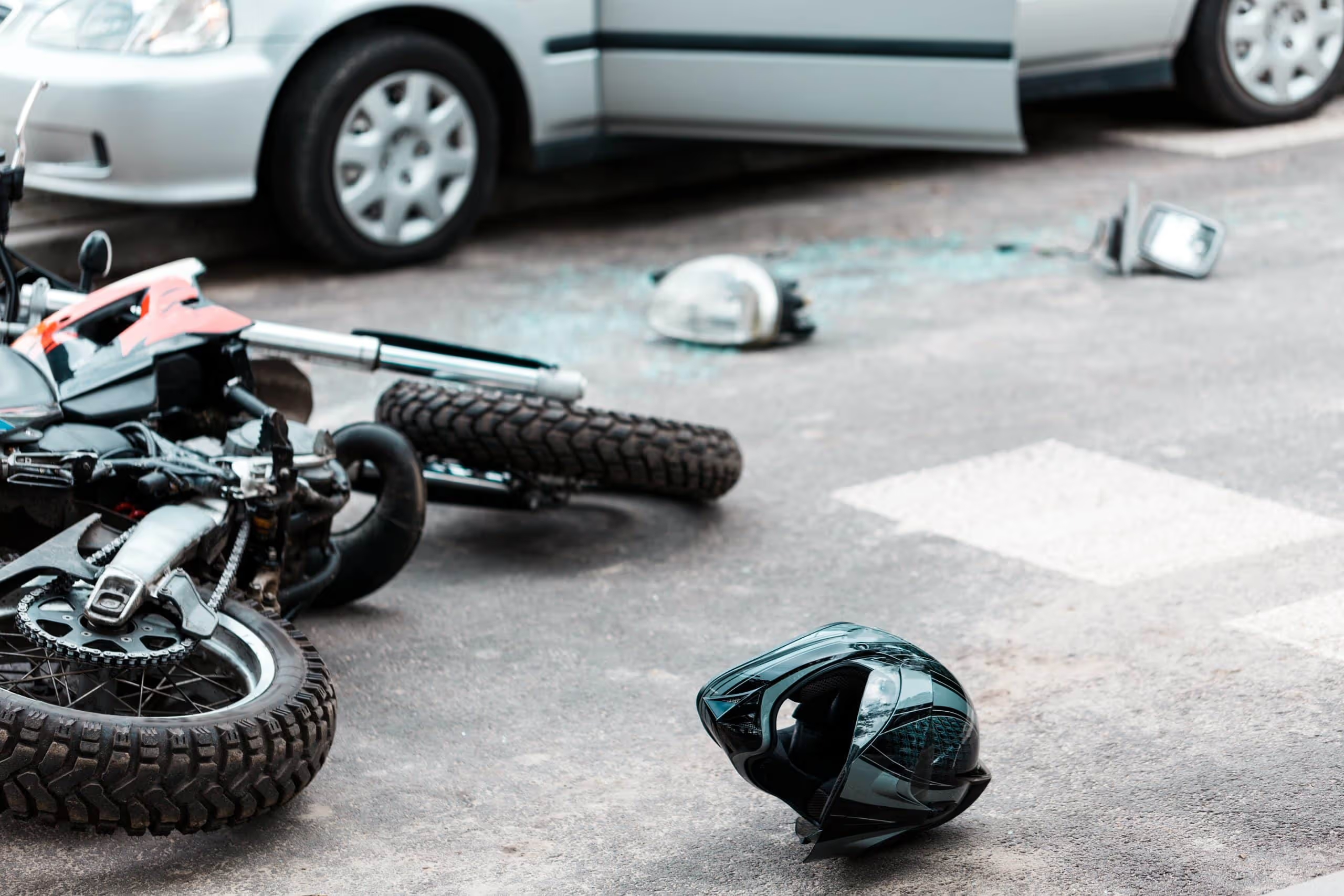

Not wearing a helmet in California weakens your motorcycle injury claim for head and brain injuries but does not bar you from recovering compensation. California's pure comparative negligence system reduces your award based on your percentage of fault, and helmet non-compliance is regularly used by insurers to argue you contributed to your own head trauma.
California Requires Helmets for All Motorcycle Riders
California Vehicle Code Section 27803 requires every motorcycle rider and passenger to wear a U.S. DOT-compliant helmet at all times while riding. There are no age or experience exceptions. Riding without one is a violation of state law, and that violation can be introduced as evidence of comparative fault in a personal injury proceeding. Non-DOT-compliant helmets, including novelty helmets that lack the required protective ratings, are treated under the same standard as riding without a helmet.

How Comparative Negligence Applies to Helmet Non-Compliance
California's pure comparative negligence rule allows injured parties to recover even if they bear significant fault, but the award is reduced proportionally. If a jury finds that your head injury would have been less severe with a proper helmet, a portion of your head injury damages may be reduced accordingly. The at-fault driver remains fully responsible for all injuries that a helmet would not have prevented. Spinal cord damage, road rash, fractured limbs, and internal injuries are not affected by helmet status.

Which Injuries Are Affected and Which Are Not
Helmet non-compliance is legally relevant only to head, neck, and certain facial injuries. If you suffered road rash, broken bones, spinal damage, rib fractures, or internal injuries, those damages are fully recoverable regardless of whether you wore a helmet. An insurer who attempts to use helmet non-compliance to reduce compensation for a broken femur or ruptured spleen is acting beyond the valid scope of the comparative fault defense. Your attorney challenges overreaching fault assignments with medical expert testimony on specific injury causation.

How Insurers Use the Helmet Defense in Negotiations
Insurance adjusters cite helmet law violations immediately in initial settlement negotiations to anchor their offer below full value. They typically argue that a traumatic brain injury, skull fracture, or facial injury was entirely preventable. Your attorney counters these arguments with expert testimony from neurosurgeons, biomechanical engineers, and helmet safety specialists who can speak specifically to whether the particular injury type would have been affected by the type of helmet protection available.
Real-World Impact on Settlement Value
A rider who suffers a traumatic brain injury without a helmet may face a 20% to 40% fault reduction assigned to the head injury portion of their damages. A rider with a $600,000 head injury claim could see that specific component reduced to between $360,000 and $480,000 in a conservative scenario. However, if other non-head injuries represent a substantial share of the total damages, the overall settlement impact of helmet non-compliance is proportionally lower.
Building the Strongest Possible Case Without a Helmet
Not wearing a helmet does not mean you cannot recover substantial compensation. You should still seek immediate medical care, report the accident to police, document the scene thoroughly, and retain legal counsel on the same day if possible. Cases involving helmet non-compliance require skilled negotiation that isolates the helmet defense to head-injury damages only and prevents insurers from applying a blanket fault reduction across your entire claim. Insurers who overreach with the helmet defense in settlement negotiations create a favorable litigation dynamic, because overstated fault arguments are effectively countered by medical experts at deposition and trial.
Expert Testimony in Helmet Cases
Medical experts in serious head injury cases assess whether the specific injury, for example a basilar skull fracture versus diffuse axonal injury, falls within the protection profile of standard DOT helmets. Biomechanical experts evaluate the crash dynamics to determine whether helmet use would have meaningfully altered the injury outcome given the speed, angle, and mechanism of impact. This expert foundation is essential for limiting the fault reduction your insurer can successfully argue.
Certain helmet types provide protection only against specific crash mechanisms. A helmet rated for low-speed impacts may offer no meaningful protection against the rotational brain injuries common in high-speed freeway accidents. Medical experts who understand injury biomechanics can distinguish these scenarios and limit the insurer's ability to argue blanket helmet causation across all head injury types in your claim.
Work With Avian Law Group
Our motorcycle accident attorneys understand how to limit fault allocations and maximize recovery even in cases complicated by helmet law violations.
California's comparative negligence framework applies to all personal injury cases. Our personal injury lawyers fight to ensure your assigned percentage of fault stays accurate and proportionate to the actual facts.
Our car accident attorneys offer a free case evaluation to assess your claim and the impact of any comparative fault issues on your specific recovery.

Michael Avanesian, the founder and driving force behind Avian Law Group, is a passionate and dedicated attorney with a strong background in personal injury law. As a partner at JT Legal Group, Michael led the growth of the personal injury practice from a single employee to a team of over ninety professionals, securing over $2 billion in settlements for clients in just three years.