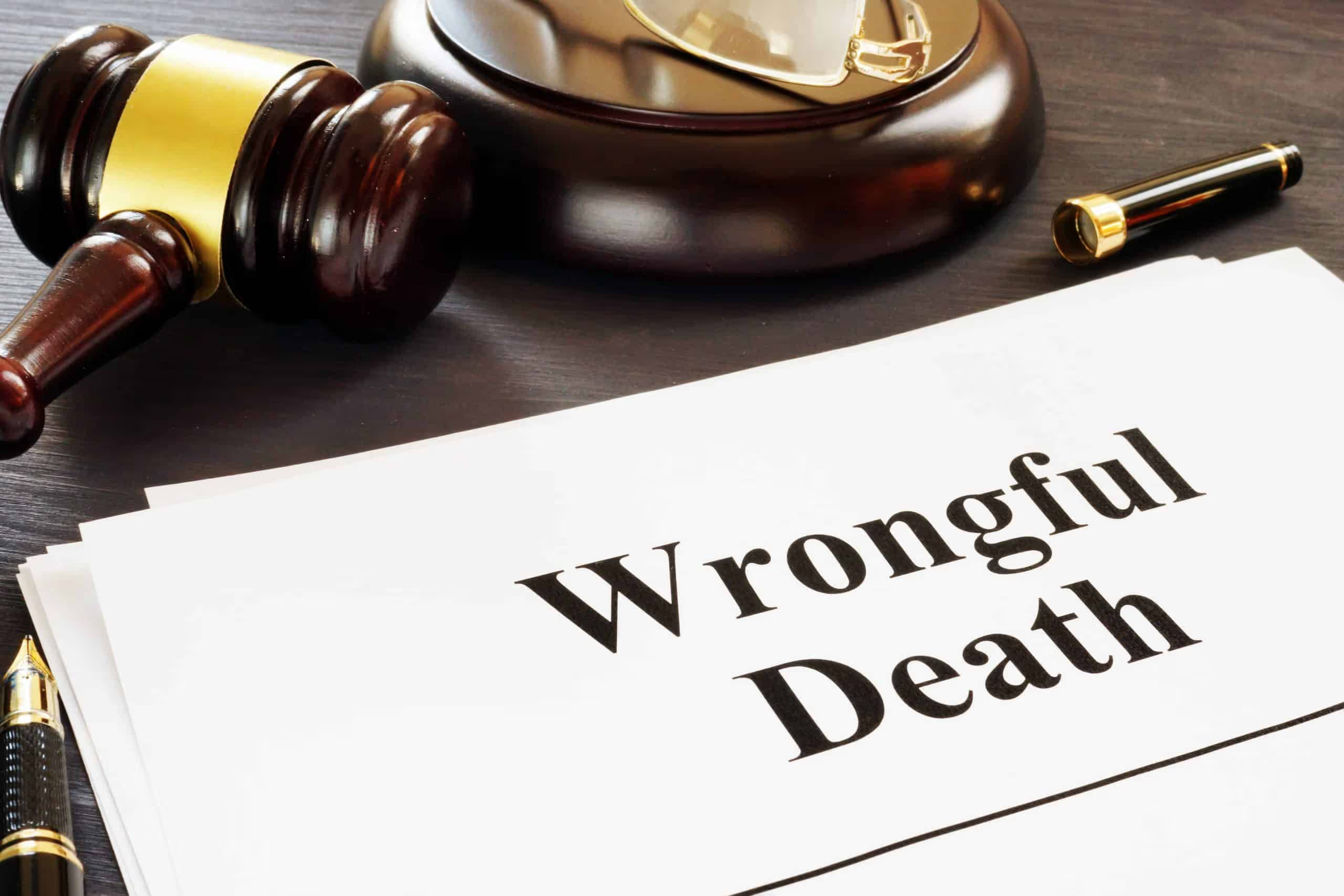

Wrongful death occurs when a person dies as a result of another party's negligent, reckless, or intentional conduct. California law gives specific family members and dependents the right to file a civil claim against the responsible party to recover both economic and non-economic losses resulting from the death. Understanding who can file a wrongful death action, what damages are available under California law, and how the legal process works gives grieving families the information they need to make informed decisions about pursuing compensation while managing the emotional weight of loss.
Who Can File a Wrongful Death Claim in California
California Code of Civil Procedure Section 377.60 identifies who has legal standing to bring a wrongful death action. The statute creates a hierarchy of potential plaintiffs based on their relationship to the deceased:
- The surviving spouse or registered domestic partner has primary standing and can file independently without needing permission from other family members.
- Children of the deceased, including biological children, adopted children, and in some cases stepchildren who were financially dependent on the deceased, can file either independently or jointly with the spouse.
- If there is no surviving spouse or children, the deceased person's parents may file a wrongful death claim.
- If there is no spouse, children, or parents, siblings and other dependents who can prove they were financially reliant on the deceased may have standing to bring the claim.
Only one wrongful death action can be brought on behalf of all eligible heirs for a single death. If multiple family members have standing, they must either agree on a single representative plaintiff to bring the action on behalf of everyone, or the court will consolidate their individual claims into one proceeding. The damages recovered are apportioned among the heirs based on each person's specific loss and their relationship to the deceased.

What Damages Wrongful Death Claims Cover
Wrongful death damages in California fall into 2 broad categories: economic and non-economic. Our article providing an overview of a wrongful death lawsuit covers how these categories apply to different types of fatal accidents, from motor vehicle collisions to medical malpractice to workplace fatalities. The specific damages available depend on the circumstances of the death and the relationships between the deceased and the surviving family members.
Economic damages include:
- The financial support the deceased would have provided to their family over their expected remaining lifetime, calculated based on the deceased's age, health status at the time of death, earning capacity, work-life expectancy, and the family's financial dependence on those earnings.
- The value of household services the deceased performed, including childcare, home maintenance, financial management, and other contributions that have economic value even though they were unpaid.
- Medical expenses incurred between the time of injury and death, which are recoverable by the estate as part of the wrongful death claim.
- Funeral and burial costs, which can be substantial and represent an immediate financial burden on the family.
Non-economic damages include:
- Loss of the deceased's love, companionship, comfort, care, assistance, protection, affection, and moral support to the surviving family members.
- Loss of the deceased's training and guidance for children, which is particularly significant when the deceased was a parent of minor children.
- The value of the deceased person's society, which encompasses all of the intangible benefits of their presence in the family structure and relationships.
California law does not allow wrongful death claimants to recover for their own grief or emotional distress as separate line-item damages. However, the loss of companionship and relational value captured in non-economic damages can be substantial and often exceeds the economic damages, particularly when the deceased was young, was the primary caregiver for children, or had a very close relationship with surviving family members.

Wrongful Death vs. Survival Actions
A wrongful death claim is often filed alongside a survival action, which is a separate legal mechanism that serves a different purpose. The difference between wrongful death and survival actions is critical to understand because families are entitled to pursue both simultaneously. A wrongful death action compensates the family for their losses after the death, while a survival action compensates the deceased person's estate for losses the deceased themselves suffered before dying.
A survival action can recover:
- The deceased person's pain and suffering from the time of injury until death, which can be significant in cases where the person survived for hours, days, or weeks after the initial injury.
- Medical expenses the deceased incurred before death, including emergency care, surgery, hospitalization, and all treatment received during the survival period.
- Lost earnings from the time of injury until death, representing the income the deceased would have earned during that period had they not been injured.
- Property damage to the deceased person's belongings, including damage to their vehicle in a car accident case.
Both claims can be pursued simultaneously, and in most cases they should be. In a car accident that results in death several days after the collision, for example, the survival action captures the deceased person's medical expenses and suffering during those days in the hospital, while the wrongful death action captures the family's ongoing financial and emotional losses after the death occurs. Together, they provide complete compensation for all of the harm caused by the wrongful conduct.

The Statute of Limitations and Time Sensitivity
Wrongful death claims in California must be filed within 2 years of the date of death. This deadline is strict, and missing it permanently bars the claim regardless of its merits or the strength of the evidence. There are narrow exceptions in cases involving government entities, which have a 6-month deadline for filing an administrative claim before a lawsuit can proceed, and in cases where the cause of death was not immediately known and could not have been discovered through reasonable diligence within the 2-year period.
Time sensitivity matters beyond just the legal deadline. Evidence degrades as time passes. Witnesses become difficult to locate or their memories fade. The defendant's insurance company and legal team have more time to build their defense and identify ways to minimize liability. Physical evidence from the accident scene may be lost or destroyed. Starting the investigation and claim development process promptly produces stronger cases and better outcomes.
If your family has lost someone due to another party's negligence or wrongful conduct, a wrongful death attorney can evaluate the specific facts of your case, identify all potentially liable parties, calculate the full economic and non-economic value of your loss using expert testimony and economic analysis, and pursue both a wrongful death claim and a survival action when appropriate to ensure your family recovers the full compensation California law provides for this devastating loss.

Michael Avanesian, the founder and driving force behind Avian Law Group, is a passionate and dedicated attorney with a strong background in personal injury law. As a partner at JT Legal Group, Michael led the growth of the personal injury practice from a single employee to a team of over ninety professionals, securing over $2 billion in settlements for clients in just three years.