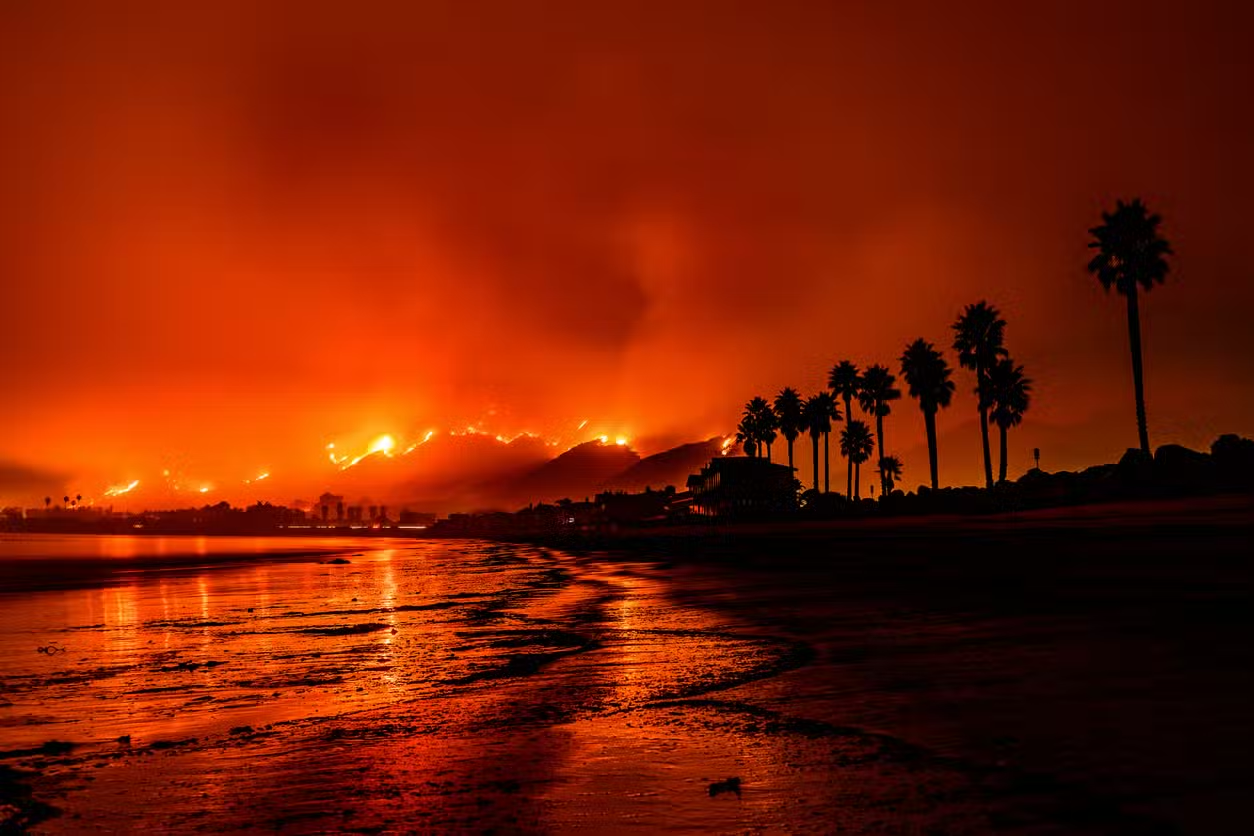

Yes. If a utility company's equipment or maintenance failures caused a wildfire that damaged your property or injured you, California law allows you to file a lawsuit for full compensation. Multiple California wildfires have been traced to utility company negligence, and billions of dollars in settlements and verdicts have been awarded to affected residents.

How Utility Companies Cause Wildfires
The most common ignition sources tied to utility companies include:
- Overhead power lines contacting trees and vegetation due to inadequate trimming
- Aging transformers and conductors that spark or overheat during normal operation
- Equipment failure during high-wind events when lines sway and arc
- Failure to de-energize lines during forecasted extreme fire weather conditions
PG&E was found responsible for the 2018 Camp Fire that destroyed the town of Paradise and killed 85 people. PG&E pleaded guilty to 84 counts of involuntary manslaughter and established a $13.5 billion trust fund for wildfire victims.
The Legal Standard: Inverse Condemnation
California law imposes inverse condemnation on utilities operating under public franchises. Under this doctrine, a utility is strictly liable for property damage caused by its equipment regardless of whether it acted negligently. The plaintiff only needs to prove the utility's equipment was a substantial factor in causing the fire. This is a higher standard than ordinary negligence and makes it significantly easier for wildfire victims to establish liability.

What Damages You Can Recover
A lawsuit against a utility company can recover:
- Cost of repairing or rebuilding your home to pre-fire condition
- Replacement of destroyed personal property at fair market value
- Smoke, ash, and soot remediation costs
- Temporary housing and additional living expenses
- Lost business income and lost rental income
- Medical bills for physical injuries
- Emotional distress damages
- Punitive damages in cases involving extreme recklessness
Individual Lawsuit vs. Utility Claims Program
After a major wildfire, the responsible utility typically establishes a claims program to process payments outside of court. These programs resolve claims faster but almost always offer less than full value. You are not required to accept a claims program offer.
For substantial property damage, serious injuries, or total loss of a home, an individual lawsuit typically produces a higher recovery because it allows full discovery of the utility's maintenance records, safety violations, and internal communications.

Statute of Limitations
You generally have two years from the date of the fire to file a personal injury claim and three years for property damage. Deadlines can shift depending on whether the utility is publicly or privately owned.
An ash and soot damage attorney or fire damage attorney can evaluate your losses and determine whether the claims program offer is fair. If you also suffered physical injuries, a personal injury lawyer can pursue both property and injury claims simultaneously.

Michael Avanesian, the founder and driving force behind Avian Law Group, is a passionate and dedicated attorney with a strong background in personal injury law. As a partner at JT Legal Group, Michael led the growth of the personal injury practice from a single employee to a team of over ninety professionals, securing over $2 billion in settlements for clients in just three years.